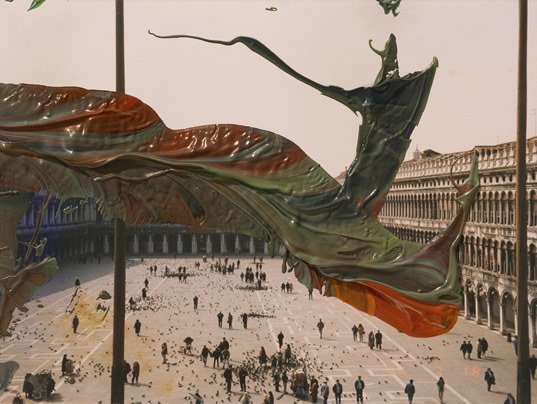
THE BORDER SUBLIME By Margret Grebowicz *** The Montréal Review, September 2026 |
|||
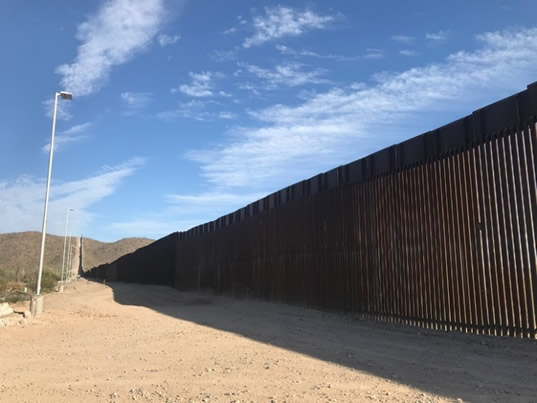
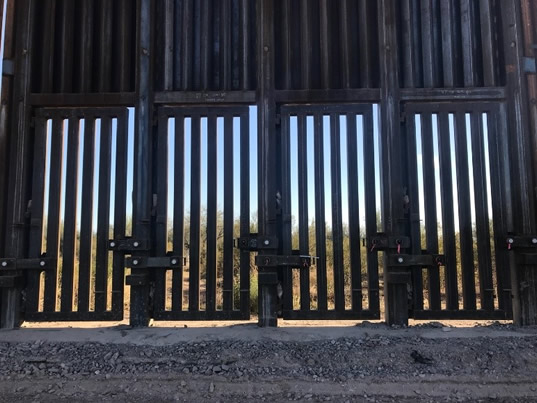
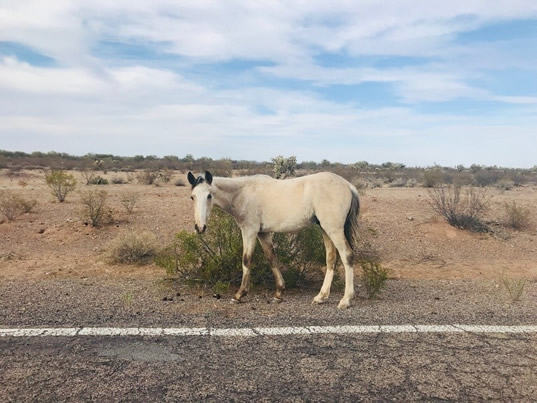
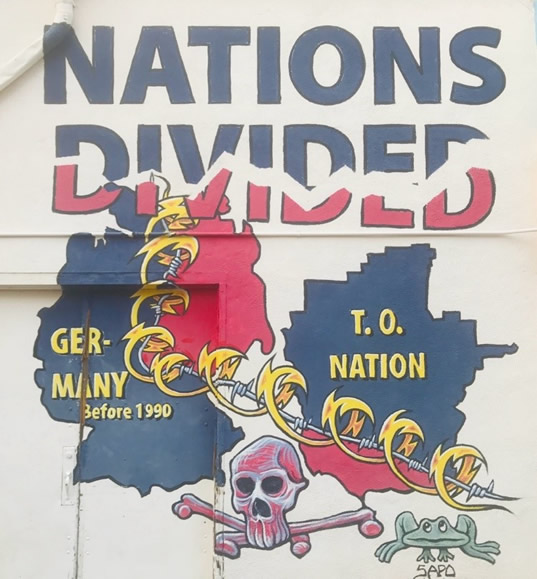
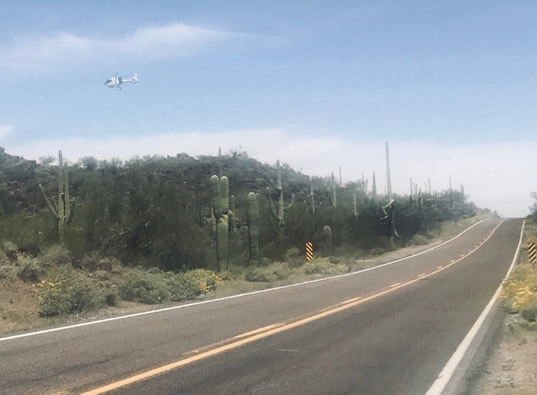
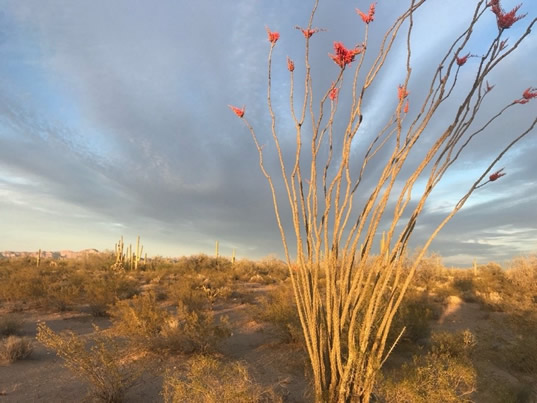
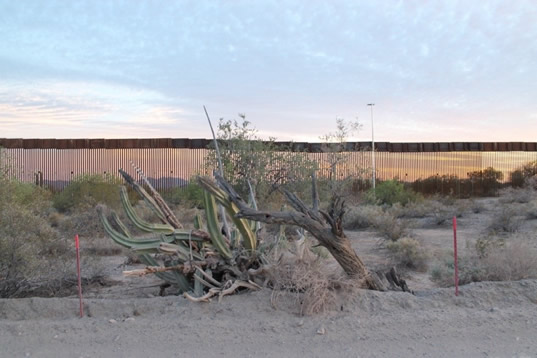
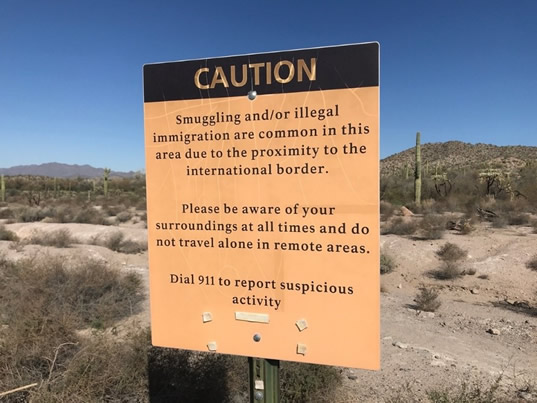
There is no other place in the world like Organ Pipe Cactus National Monument in Arizona. No other national park unit in the U.S. has a comparable level of border security. The park has just recently reopened in full, after years of recovering from border wall construction. But the Trump administration has announced a new, massive border security expansion, which began this past summer. The expansion includes building a second border wall 150 ft. north of the existing border wall inside this park, as well as new border wall planned inside the neighboring Tohono O’odham Nation reservation, where there is currently only rudimentary fencing. A UNESCO biosphere reserve, 95% of Organ Pipe is designated wilderness, and so under the highest level of environmental protection that U.S. law provides. It is a powerful landscape, a spectacular and delicate part of the Sonoran Desert. Despite this, Customs and Border Patrol is entitled by law to override any and all wilderness laws in order to execute its mission of protecting the border, as long as it can demonstrate exigency. The national park visitor is primed for spectacle, and the border wall is nothing if not spectacular. It runs the entire length of Organ Pipe’s southern boundary, and one of its most spectacular aspects is its permeability, in both the physical and ideological sense: the permeability of the border for large groups of migrants, the environmental effects of the funneling of human and animal movements through the wall’s still-unfinished sections, and the border as just another exhibit in the park for visitors to experience—a metaphorical hole in its seriousness and invisibility as a tool of the state. As uncanny and compelling as it is, however, the border wall is just one small piece of what makes Organ Pipe and the surrounding regions unique. I spent the month of April 2021 at Organ Pipe, right before the governor of Arizona declared a state of emergency for the entire length of the state’s border. These are my field notes from visits to the park and the Tohono O’odham Nation reservation. As The Trump administration returns to destroying U.S. public lands in the name of border security, the notes are my reminder to myself that we have been here before, in this state of exigency. That, as the excavators roll into town again, like some kind of invasion, it’s time to start taking notes again. One enters the park by means of the highway that bisects it, the 85. This highway is also the most impressive opening in the border, the port of entry in Lukeville. Interstate 85 connects the metropolis of Phoenix to the resort city of Puerto Peñasco on the Gulf of California. This highway splits Organ Pipe into two parts and is the only port of entry for hundreds of miles. The road and the wall meet at the port of entry in Lukeville, at what looks like a perfect right angle. To move through this park is to move along and across--and often be slowed down by--these two barriers.
West Side
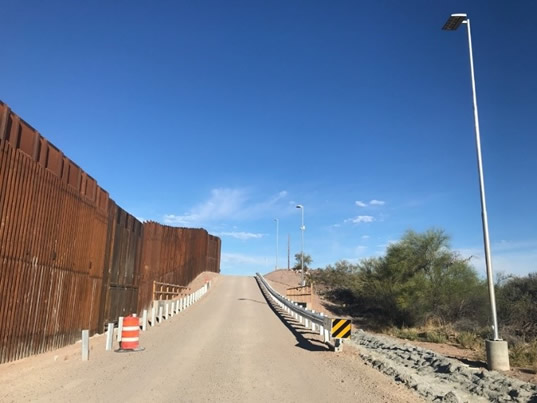
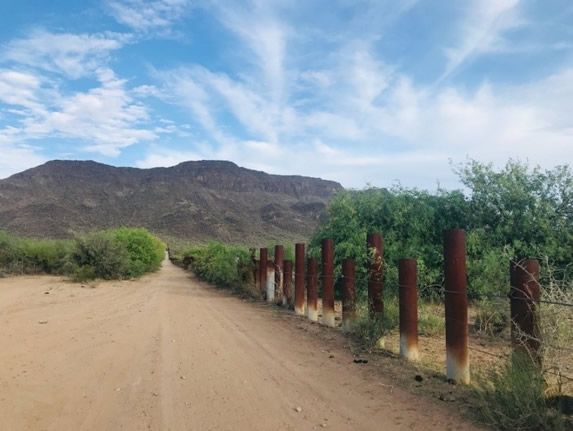
On the West side, the border wall construction remains unfinished, which means that the Roosevelt Easement, the road that runs the length of the wall and on which only official vehicles may drive, is still dirt.
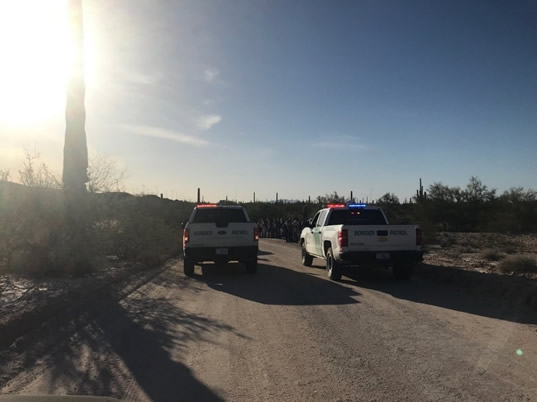
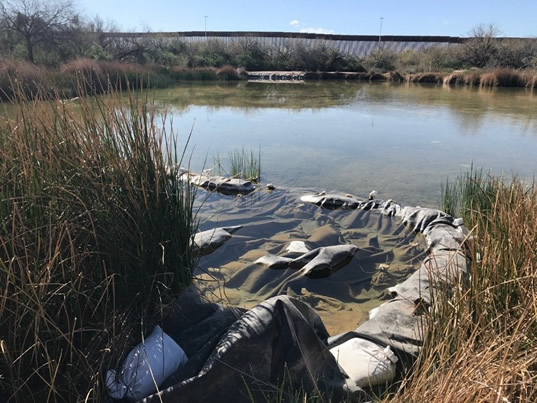
I drive into the park via South Puerto Blanco Road, towards Quitobaquito, the ancient oasis, the only year-round water source for hundreds of square miles and revered site for all the people who lived here for thousands of years before the park’s creation. I pull over at the first place where it is easy to park and walk across the Easement, to look at, touch, and of course photograph the border wall. A few minutes later, a father and son pull up in their car. The dad urges the little boy to make like he’s scaling the wall, while dad photographs. I move on, and within minutes, encounter a large scene blocking the way. “57 give-ups from Venezuela,” the officer explains as I awkwardly try to turn the car around on the narrow dirt road. Give-ups, I learn later, traditionally referred to migrants who were too exhausted to continue turned themselves in at gas stations or along major roads. These days, more and more give-ups fit a different description, that of people crossing the border and immediately turning themselves in to border patrol, never runners to begin with. “May I photograph?” “I’d rather you didn’t,” says the officer, “but I can’t stop you.” I’m squinting into the low-hanging sun, but even so, I distinctly see some people in the group wearing white jeans. There are children, but they are pulling those little wheeled suitcases for kids, like you’d see at an airport.
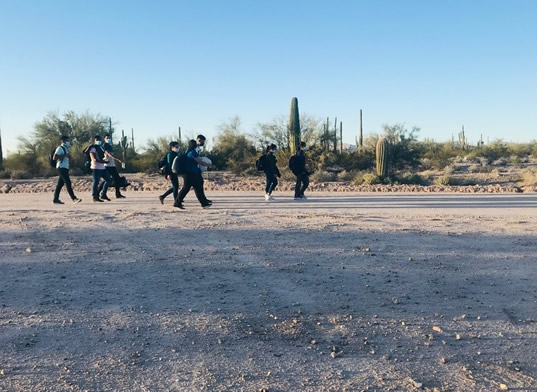
I go back the next day at the same time—the golden hour-- and encounter another group, this time before BP gets there. Many minors, most of them boys, a few small children, and at least one woman carrying a baby. Everyone is dressed well and tightly masked. The clothes are especially noticeable, designer brands, nice luggage, jewelry. An older man, one of few older people in the group, waves for me to roll down my windows. “Estamos venezolanos,” he says more than once, gesticulating that I should call border patrol. This late in the day, the chances are good that I am the first person the group has encountered after crossing. I stop the car despite the many signs throughout the park that warn visitors to avoid contact with migrants—signage from years ago, back when runners were the ones you were most likely to meet. This large group consists of smaller groups of family or friends. A teenager asks for water, and I give her the unopened gallon in my trunk. Many speak some English, and all seem relieved to see me. I take some photos.
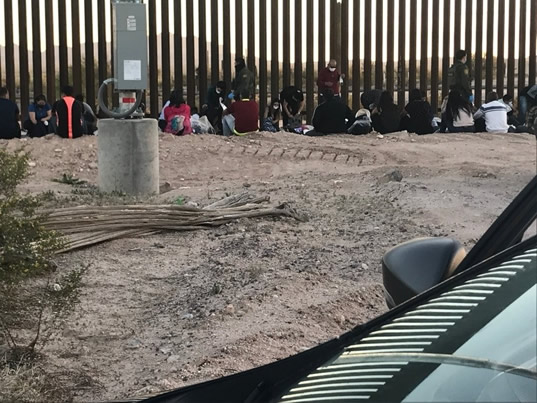
The girl lets out a happy shriek as she runs back to her cluster of people with the water. A slight and friendly young man approaches with his father, explaining that they’ve been traveling for several days, by airplane and bus. He’s studying to be a dancer. He asks where the pictures will appear, where his picture will appear, as others call to him to keep moving. By the time I catch up to them again, BP has lined them up against the border wall. More and more agents drive up, their trucks creating a sort of barrier between me and them. As everyone is asked to surrender their valuables, the last of the group are walked in along the Roosevelt Easement, the road that lines the wall, for official vehicles only. Among them is a woman carrying a baby on her chest underneath a white cloth. I am told to stay at a distance but allowed to photograph. Most of the agents avert their faces. Ultimately, the group is asked to sit facing the wall.
The following morning, I am on the phone with the Public Lands Liaison for the Tucson Sector of BP. Their jurisdiction is from the New Mexico state line all the way to the Yuma County line, 262 miles of border. That’s almost all of the Arizona border, of which 82% is on public land. Arizona is unique in this strange respect: most of the border in this state is on land that belongs democratically to the American people. “May I ask you about what I witnessed today?” “Yes.” “Um… so…. what exactly did I witness? How do over 60 people (at once) cross the border in broad daylight without getting stopped, and without their clothes getting dirty? I hear rumors that the South Side has keys to the floodgates. Is that true?” Long pause. “I can’t speak to that.” “Is it some paranoid fantasy? Is it worth pursuing?” “Ma’am, I cannot speak to that.” Another pause. “I’d be happy to help you,” he finally continues, “but you need to decide how deep you really want to go.”
East Side
My ranger friend Phil takes me to where the border wall ends in the East, where the Sierra de Santa Rosa create a natural barrier between the park and the neighboring Tohono O’odham Nation Reservation. Not so long ago, all this land was O’odham. Every mountaintop was where the O’odham took the corpses of their Apache enemies in battle. Unlike the West side, the East side of the wall is finished, and large sections of the Easement here are built to address the hydrological problems that the wall brings with it. The flood areas are concrete. In its finished state, this border wall is the industry standard for the rest of the country: while the wall changes slightly from state to state, this is the tallest and strongest construction anywhere. Along the way I see flood gates again, elaborate aqueducts, and even a cat hole for animals to move through—though clearly only very small animals can fit.
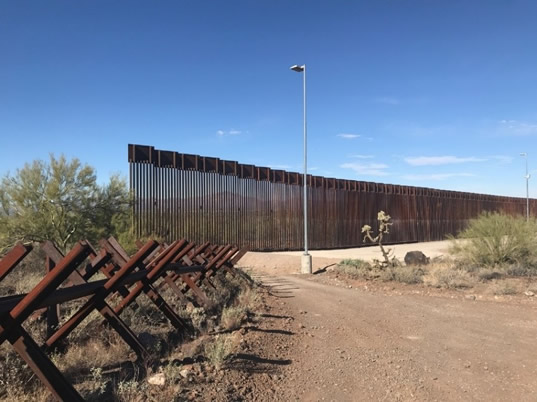
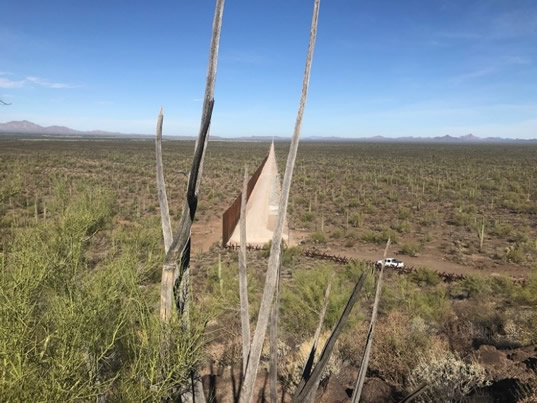
We arrive at the end. It was too expensive to keep building up the mountain, so there’s nothing there except some vehicle barriers, called Normandy barriers. We both jump over them and hike up the mountain for some spectacular photos of the length of the wall as it runs across the vast valley, from here all the way to Monument Hill, past which it of course continues to stretch. Monument Hill is, like every mountain in the area, where the O’odham people laid the bodies of their Apache enemies. We quickly scramble up another such mountain and look out West. Phil wants me to take in the vastness, the variety, most of which is the alluvial fan that stretches out and downwards from the very mountain range on which we are standing.
The point is not only the pleasure of the landscape, but the long view. What this means for the park. His own interests lie in showing me how much damage border security does. Whenever he drives me around, he points out every few minutes where BP has driven vehicles where they should not have, driving right past the signs that say “restoration area,” put there expressly to deter them. The worst damage is from the military surplus SUVs, because they can zip around anywhere—and they do. BP has the right to override all wilderness restrictions for up to 100 miles north of the border. “How long do you think this ecosystem can take getting hit from all sides?” he asks. We stare in silence at the flat expanse of saguaros, for which I have always found “national forest” to be a hilarious designation. But this is the only place in the country where all three of the giant cacti—organ pipe, saguaro, and senita—grow as native species. Many are over 100 years old. For the O’odham people, the saguaros, or Ha: san, are people, and they are about to pass a resolution recognizing their personhood in order to protect them.
Tohono O’oham Nation Reservation
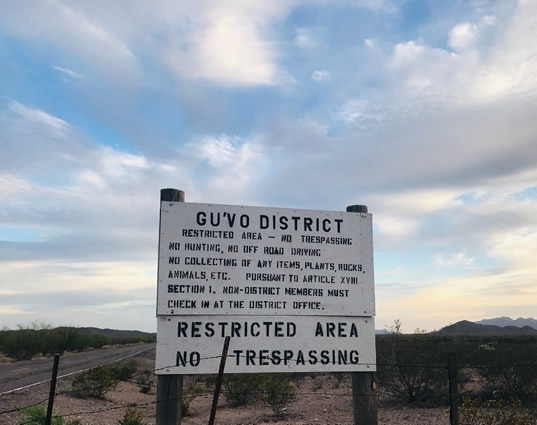
No one from the Nation will respond to my emails, not even the Tribal Historic Preservation Officer, who is Anglo, as I find out later from the Cultural Center director, who is also Anglo and also won’t talk to me beyond the one phone call in which I happen to catch him by surprise. The reservation is under strict quarantine, even after the rest of the U.S. has begun to reopen. “May I drive onto it?” “Yes, that’s one of the roads that takes you to Tucson.” I play dumb about what that means and drive in on the 86, despite massive, handwritten “no trespassing” signs everywhere. Mo dog Abba is in the backseat. I make the sharp right from the highway, to drive south to the village of Ali Chuk. The road changes immediately, from a typical U.S. highway to a country road filled with potholes so massive that they are encircled with white spray paint so as to be more visible. More “no trespassing” signs appear, and at this point, it’s clear that what I’m doing is not quite legal. The drive is slow and long. And gorgeous, different. The horizon seems further away here, and the sky less clear. The whole rez is free range, so cattle walk across the road all the time, to graze. That and the potholes slow me down.
I pass two police cars and they turn around and follow me. The cop car behind me drives way up to my license plate and follows me closely, just like that, for what feels like a long time, with no other cars around. He never turns on his lights. I continue at a casual 45 mph, avoiding the potholes and playing dumb. They cops fall back and turn away, and I’m triumphant. It’s an interesting moment: I know I’m breaking the law, and I suspect that they know that I know, but since my car registration checks out, they have decided to leave me alone. I drive through the village of Ali Chuk and stop to figure out how to get down to the wall. A woman stops her truck next to me, to ask if I need help. We chat for a bit and she explains that she’s on TikTok and posts videos of the wall all the time all the time. It’s down that way, she point. She tells me I’m not really allowed to be there: T.O.P.D. should have escorted you out, she says, and they probably will. She gives me directions anyway, and I drive on. Everything down here is still and silent and green like only the desert can be green in spring, at dusk, when the haze has lifted.
Slowly, I drive down to the unfinished wall, just a simple car barricade. Nothing to look at. No BP in sight, no other humans in sight, and maybe for that reason, I realize that I’m scared. I swallow hard and get out to take some photos. There are cows wearing tags and bells, a good sign. I drive down about another 500 feet and suddenly there’s a car parked on the South side, with two people sitting in it. It’s too much for me and I flee. Within minutes, as I approach the town again, the police cars reappear, but this time it’s one behind me and one in front. No lights necessary: I’m not going anywhere. I’m committing criminal trespassing, I am told. I explain myself and they are kind. I lie a tiny bit, but not that much. The second officer says hello to Abba while I photograph the text on the side of the patrol car. Ha-ñu: kud c Ep I-Ha-We:mt This language is Uto-Aztecan, not Athabaskan, underlining the absurdity of the US/Mexican border from the O’odham perspective. There is no mistaking the fact that I am in another country down here. The officer won’t let me photograph their coat of arms, and not only that—to even get an explanation for why I may not photograph the coat of arms, I must apply for a research permit. It’s not expensive, he says, but in order to get it, you have to list every question you’re going to ask in the application itself. And only those will be answered. That’s just how it is. Street dogs come. They are—how can I describe this?--eaten alive by mange, so badly that one of them has half her face bloody from scratching. They all have teats hanging down, they’re hungry, dirty, anxious. I don’t know how long it’s been since someone has touched them. “Roll up your window,” the officer says, “you don’t want your dog to catch something.”
Ajo
I sit with a Hia C-ed O’odham elder named Lorraine Eiler who tells me the stories of how Quitobaquito was once a village that stretched well into what is now Mexico. Her great grandparents are buried on park grounds. Hia C-ed are the tribe that lived all over these lands, but they are not recognized and so have attached themselves formally to the Nation. I mention that I’ve been having trouble getting the official spokespeople who work for the Nation to speak to me. Whom did I try? I name the names and she waves them off. "They’re just employees.” She gives me the name and phone number of someone I should interview. He knows all of this very well, she said, more than most. He is a retired math teacher in Tucson, and the only Anglo she knows of who has walked all the ancient roads, hundreds of miles of them. More than once.
Vilem Flusser wrote that “home” is not something true and eternal. It’s not even a fact in the world, but rather something that results from a certain technique. Flusser, who moved countries many times and wrote in languages that were not his native language, must have found great relief in this. It’s what makes it possible to, as they say, “make a home.” But that changes nothing about the way a person feels when the ties to home are severed. “Whoever loses his home suffers. He is bound to his home by many threads, most of which are secret threads beyond his consciousness. If the threads tear or are torn, then this tear is experienced as a painful surgical incision into his most private self.” (92-3) There are just as many ways to be bereft of home as there are homes. The history of O’odham dispossession tells many such stories. But, as late modern people, most of us can’t find a way to feel “at home” anywhere, no matter how we try. And that’s its own pain, diffuse and ambient.
West Side
The park ecologist Peter sits with me at a shaded picnic table just several feet away from the Visitor Center, named after ranger Kris Eggle. Eggle was shot in a chase between park law enforcement and a South Side presence of some kind. As a visitor, you never find out who shot him, because the monument only announces that he died “while protecting visitors from harm.” The mood is unusual for a national park Visitor Center: the narrative is clearly meant to remind visitors that rangers are law enforcement agents, and that this is a dangerous place. In all my travels to parks, I’ve not encountered anything else like it. From Peter’s perspective, the border wall is a small problem compared to all the others. He’s been in this region since 1977, and he’ll retire in three years. “I bet you saw that viral photo of a dead deer next to the wall,” he says, exasperated,” but do you know how much roadkill we deal with because of this godforsaken highway? And no one publishes photographs of that.”
While American mainstream media relentlessly focuses on the wall, not least because it’s epic and sexy, the much less sexy topic of sustainable agriculture is the elephant in the room. The Rio Sonoyta is drying up and the groundwater levels are dripping dramatically, a result of wells dug for agriculture on the Mexican side. That’s what’s slowly killing Quitobaquito, says Peter.
And really, he tells me, the main problem is the human presence. The test flights overhead from the neighboring Barry Goldwater Air Force Base. Even the humanitarian presence, in the form of the water containers legally set up in the desert for migrants. “And tourists?” It seems to me that the park visitors are the least invasive, given all the trash that results from the illegal crossings and BP’s wanton driving through designated wilderness. “True,” he says, “but visitors do harm in other ways.” “Like what?” “Like letting their dogs off lead.”
East Side
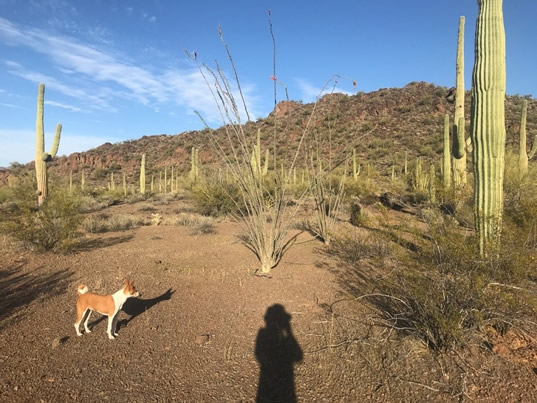
It’s as if he could read my thoughts. Let’s face it: I can go only travel for so many days before letting my dog off lead, legally or not. One lovely early-evening, I drive Abba to Tillotson Peak Wayside, way in the northeast, where there’s a paved lot and no other cars or people. Off lead is against park regulations, but there’s no one here, and my dog needs to run. Not a soul to be seen in any direction. We hike into the nearby canyon and sit down for a bit to think. Abba loves nothing more than this: a long walk off lead that ends in a sitting together, to silently ponder the landscape and listen to birds and insects and watch the sky turn colors.
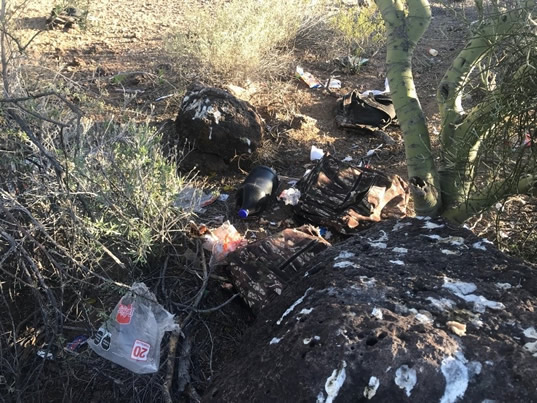
That’s when I notice the birds—are they vultures?—circling above a small area, which turns out to be a migrant encampment. Four camo backpacks have been left here and are now being torn apart by birds and coyotes. There’s a mountain of trash, including tubes of toothpaste, toilet paper, empty black water bottles, plastic bags of chips. I open a compartment in one of the backpacks and find an unopened jar of mayonnaise.
And, as if this weren’t creepy enough, my dog has suddenly vanished. I call to her for what feels like forever and start running back and forth between the camp and my car, desperately calling out “Abba!” Maybe it’s only been five minutes, but it feels like too long. She’s never gone for this long, and I’m running back to the parking lot again, and like a miracle, suddenly, in the glow of the setting sun—again—like some angel, BP is there. It’s a truck with a trailer with an ATV on top—that thing my ranger friend says does the most damage to the desert ecosystem. I’m running I’m crying I’m asking for help finding my dog. What follows is nothing less than 60 seconds of exquisite ballet: both men get out of the truck and while one asks me to describe my dog, the other climbs on top of the ATV to get a better view. “I see her,” he says right away, and I realize that I’m here with surveillance specialists. The have located my dog in under a minute. “May I say hi?” asks the officer after I have her back in the car. “Is she friendly? It’s the best thing that will happen to me all day,” he says, “if I can pet your dog. New York, huh? You’ve come a long way.” I have been cursing my old Jeep and beating myself up for not springing for a rental on all these awful roads, until now: when my license plate opens a conversation that could never have happened otherwise. I tell them about the camp and the trash but they’re not impressed—because such camps are everywhere, all around. There are parts of this park, they tell me, where no one goes, and there are things there that look like landfills. The park service can’t keep up with the amounts of trash left behind by the runners. The agents’ perspective on all of this is completely different than that of my ranger friend Phil. Sure, the ATVs disturb the environment, but if BP doesn’t patrol a section regularly, migrant activity picks up in that section, which means more litter. “Not to mention that I saved the lives of 42 people yesterday,” says the more talkative one, “in different small groups that needed rescuing.” All their friends routinely get death threats—not only from the South side, but also from locals and activists on the US side who perceive them as the bad guys.
West Side
The Senita Basin is the site of the annual saguaro fruit harvest every summer. Sometimes the Tribe takes high school students or college students from the outside, to teach them the old ways. They spend the night out there, or several—something no park tourist is allowed to do. Backcountry camping, with permits, is restricted to zones and Senita Basin is not one of them. I drive the southern edge of that area every evening on my way back from taking photos of Quitobaquito, and there’s always a breeze around sunset. I try to imagine spending the night out there, once the cars have all returned to the main road and the people to town, or the campgrounds. Even if the days was cloudy—a blessing in the desert, especially for those crossing it on foot—the clouds somehow burn off at sunset and the colors emerge, however briefly. The wind moves them, and everything else, as I drive very slowly on the dirt road with all my windows rolled down. I stop, just to listen to it, and unmistakably, I hear voices whispering. Many voices at once. Or maybe it’s my own pulse, rushing through the veins in my head. But it’s something loud, and it’s not caried on the wind, but in it, like ocean water carries sound. Like a medium.
I try to imagine sleeping out in this wind, in these voices, waking up to the cold desert air before the sun starts to bake. To an outsider like me, the use of “ancestral homeland” in the Native American context is so common and so accepted that I hardly question it—what it means, or whom it truly serves. I drive slowly down the unpaved road. If something happens to my car out here, I might have to spend the night in it. The dogs would be abandoned, back at the rental house. I sometimes wonder if our newfound environmental consciousness is not about the environment at all, but a symptom of our collective anxiety about homelessness as an existential state. I mean, look at us. It’s no wonder we cling to the idea that the planet is our home, or that nature is fundamentally good, self-regulating, and balanced, a place where we humans belong. Zizek has said it’s all just ideology, a shared delusion that there is something that can protect us from the catastrophe of existing. Has it always been like this, or are we late moderns unprecedentedly without home? To answer that question, we’d have to be able to get outside this state. And I don’t believe we can get outside of it to see. No mountain vista gets us up high enough to see far enough. There are multiple O’odham reservations in Mexico, and the border is an artificial barrier on O’odham land, restricting movement between reservations which all share the O’odham language. Immigration laws prevent not only movement, but the collection of foods and materials necessary to sustain cultural rites, as well as visits to traditional sacred sites and family. The most important of these is the salt runs, a pilgrimage in which young men run to the Sea of Cortez to harvest salt and brings it back to Arizona. The salt runs were the primary reason that the Nation resisted wall construction on reservation land under the first Trump administration. Maybe instead of home, there is only the precious thing. Salt, for example. And what makes it precious is the running for it, to it.
East Side
The human of the future is the human without a home, says Flusser. When he wrote about migrants, he meant not only the people actively leaving their homelands behind and crossing borders. He meant anyone over whom the concept of home no longer holds sway. There is no question that the human without a home, the one who has been forced to overcome her home, suffers. But she is also so stripped down emotionally that she is able to think well. We modern humans have romanticized the longing for home for so long, and to such a degree, that we have forgotten that we could actually be free of it. “The famous desire for home much celebrated in prose and poetry, this secret rootedness in infantile, fetal, and transindividual regions of the psyche, cannot stand up to the kind of cool analysis that the man without a home is bound to and is capable of.” (93-4) The time has come to get over home, he tells us. Homesickness "tears at the guts,” but what comes afterwards is a new human state, a state of freedom. (95) There’s no doubt that the figure of the migrant is threatening to the existing systems of culture—and we tend to attribute this to xenophobia. But could there be a migrophobia, an irrational fear of the freedom and clarity that comes with changing place and changing habits, because it might completely change how we think about what it means to be human?
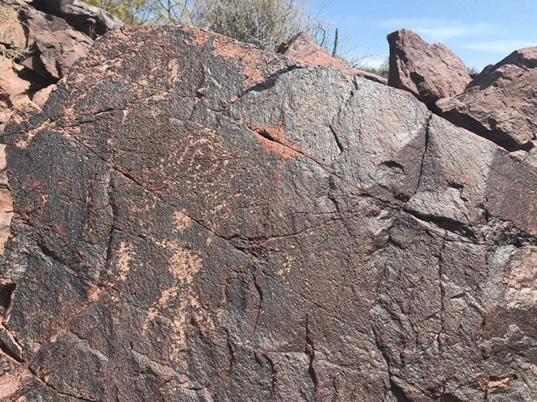
On my last morning in the park, Phil takes me to see some pictographs made by the Sonoran Desert people—until recently called the huhugam—over two thousand years ago, next to what was once an Ak Chin farm. Visitors cannot drive to this spot, only hike in. I find a pair of carpet shoes in the dirt. Carpet shoes are one of many objects created for the cottage industry the has emerged around cross border activity, designed for walking without leaving footprints. Meanwhile, BP has created so-called drags in response to carpet shoes—dragging tires across sand to smooth out the dirt and make it more difficult to hide footprints. As we’re scrambling up, Phil is behind me and suddenly I hear him say, “we have to leave.” My first thought is that there are people coming. But he wouldn’t have been scared of people. No: we have walked into the territory of an Africanized bee colony. As soon as he says it, I can hear one buzzing close by. He explains: these early messengers are the ones that warn. If you swat at one of them, they attack instantly. You have exactly one option: to leave. “How do you know they’re Africanized?” I ask. “All the bees in the park are at this point,” he says. In all the
meetings we’ve had, wandering around the desert while talking about every
possible thing, this is the only time he has told me, in an unmistakably firm
tone, to hurry up.
CONTENTS
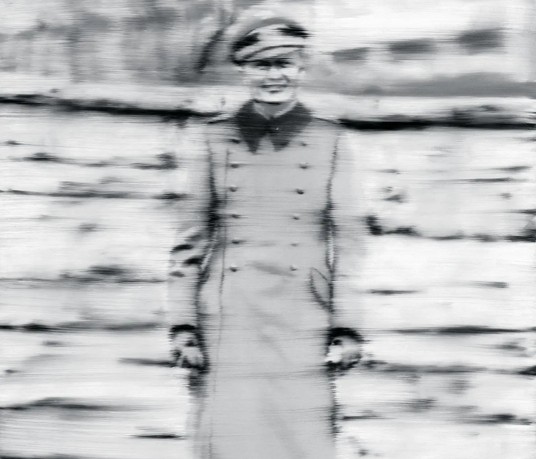
Onkel Rudi (Uncle Rudi), Gerhard Richter, 1965.
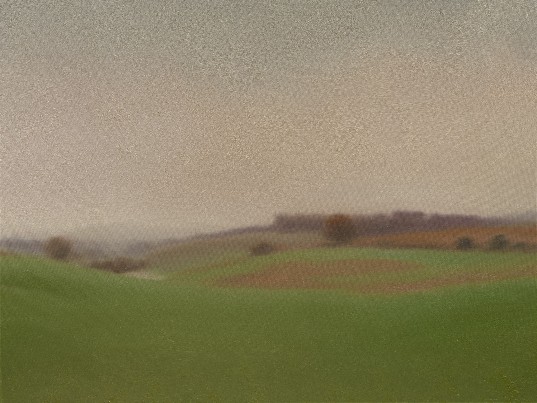
Grünes Feld (Green Field), Gerhard Richter, 1969.
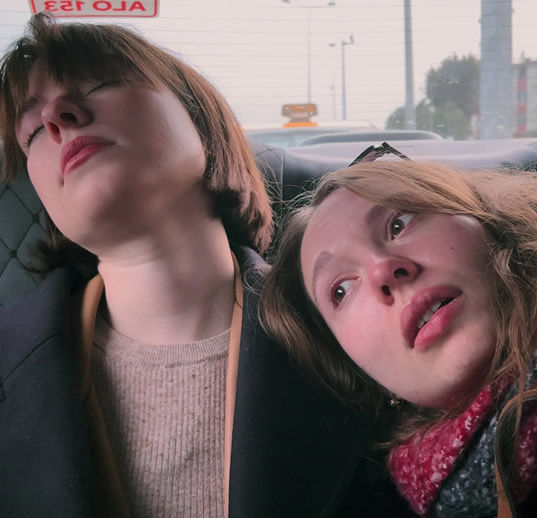
A still from My Undesirable Friends: Part II — Exile (2026)
THE SKY IS BLUE: A CONVERSATION WITH JULIA LOKTEV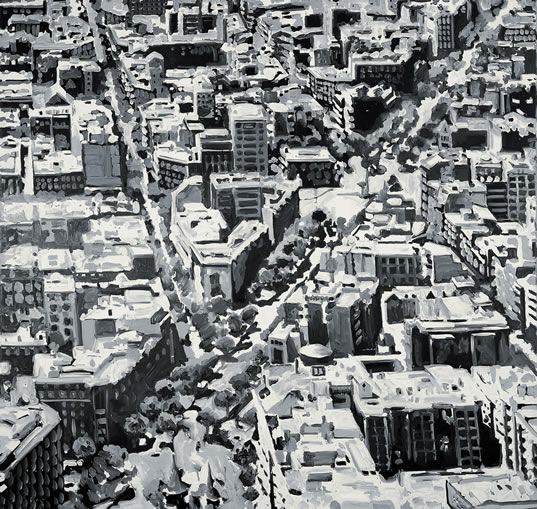
Stadtbild Madrid (Cityscape Madrid), Gerhard Richter, 1968.
INTRODUCTION: SYMPOSIUM ON CRITICAL THEORY
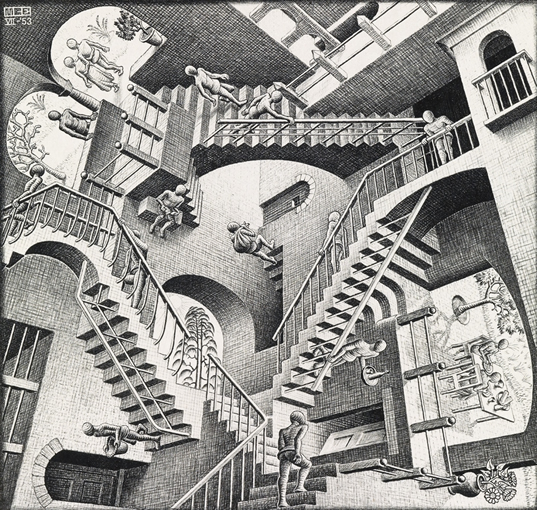
Relativity, M.C. Escher, 1953.
Cage 6, Gerhard Richter, 2006.
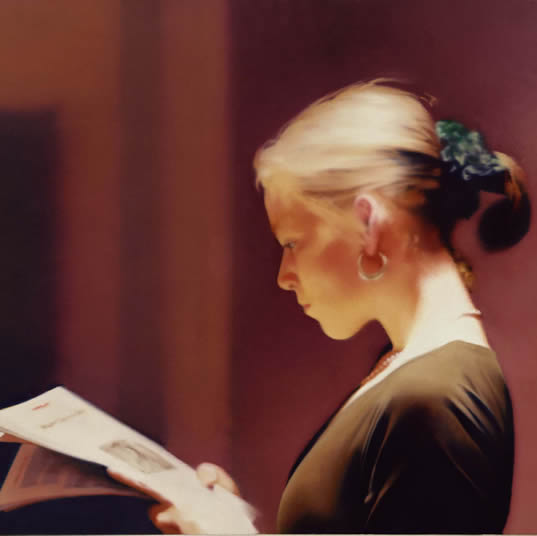
5. Jan. 98, Gerhard Richter.
|

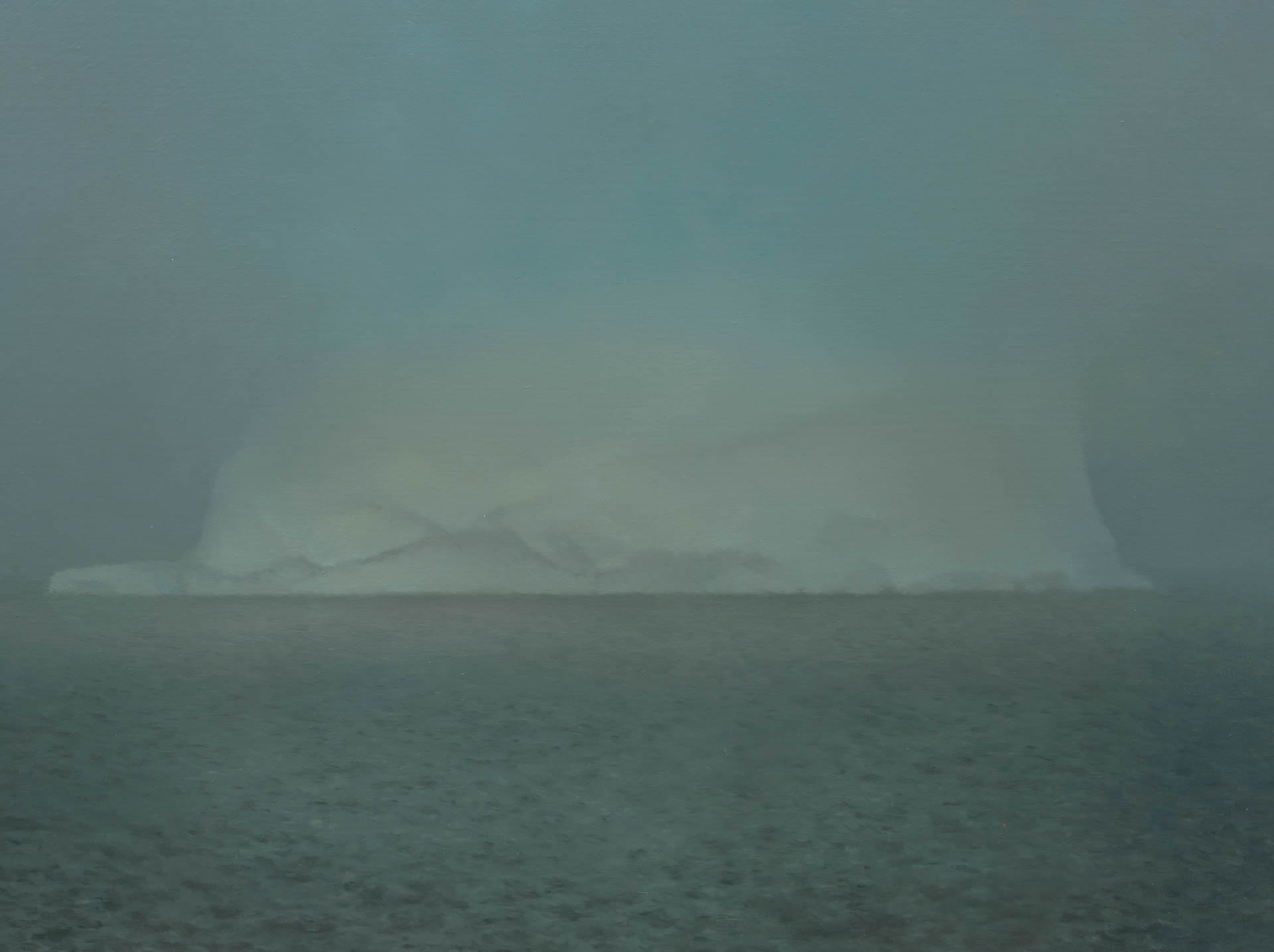
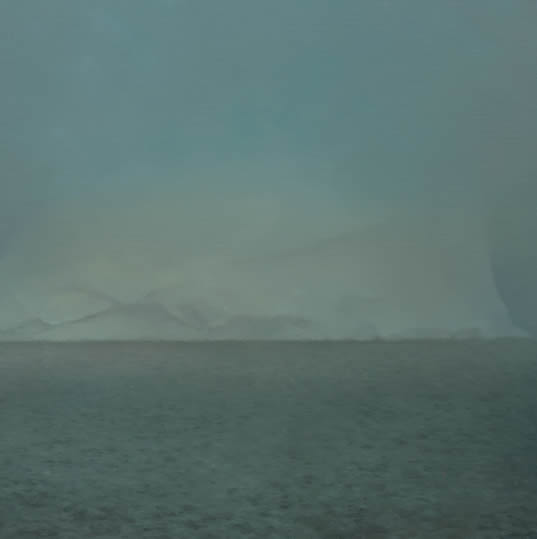
Art Note: Eisberg im Nebel (Iceberg in Mist), Gerhard Richter, 1982. Painted from photographs taken on a 1972 voyage through Greenland, in open homage to Caspar David Friedrich's Romantic sublime. Richter called ice a place to feel safe, "just so long as there is no life." The desert works the same trick on the visitor: a landscape so vast and indifferent it can absorb a border wall, a surveillance drone, a family's whole ordeal, and still just look beautiful. Oil on canvas, 70 × 100 cm. Private collection — image and details via David Zwirner. © Gerhard Richter, courtesy of the artist and Gerhard Richter Archive.