
PART TWO THREE PROBES By Darko Suvin *** The Montréal Review, March 2026 |
|||||
Probe on David Hume I accept Hume’s three foundational insights: first, of a division (but also osmosis) between the active and reasoned aspects of people’s lives; second, a “soft” scepticism (252) -- the activity is founded on a common-sense certainty or good probability of success. A third insight is a division of human “perceptions” into lively “impressions” and abstract “ideas” (24), today no more acceptable in his terms but pioneering. I also much admire his ontological and political basis, the “mutual dependence of men” (136), almost a proto-Wittgensteinian investigation. Alas, the “men” turns out upon closer inspection to be a community of male bourgeois gentlemen. Its quite clear limits, drawn by a division into undertakers and undertaken is found in his rather brutal quote about workers: “A manufacturer reckons upon the labour of his servants for the execution of any work, as much as upon the tools which he employs,” also in the little dialogue about not expecting to be stabbed “in order to rob me of my silver standish” by an “honest and opulent” friend “come into my house, where I am surrounded with my servants” (138 and 140) …. Hume’s large Section VIII is far more interested in necessity than in liberty, and he dodges examination of “contraries.” The “objects of human reason” are tricky, either ideal forms as in geometry, which are certain, or matters of fact, where the contrary is equally possible. The clearcut nature of epistemological entities and horizons is timeless (as a circle) or at least of long duration, the mind reaches there “a steadier and stronger conception” (78), while the pragmatic entities and actions are always a foray into an unknown future. Thus Hume favours Aristotle and Locke as against the adherence of Cicero and Addison to the majority or ruling opinions based on custom. He would agree with Aristotle that about a battle in the future our only certainty is antithetical: either there will be a battle tomorrow or there won’t be, and we could add: either side X or side Y will win. Commonsense has no problems with familiar processes in nature, from weight to food, but is “at a loss to assign a proper cause” for extraordinary events. Living among such “earthquakes, pestilences, and prodigies” (106), we ought to meditate upon this; also upon ill-considered makeshift solutions. A prime mega-instance is savage profit capitalism, say the imposed fashion of shifting to electric private cars, that freeze in Winter. Especially tricky is causality: recalling his earlier treatise “of human nature,” Hume absolutises in his sections III and IV the difference in nature between a cause and its effect/s, so that he finds their relation based on mere similarity. Though Hume then backtracks and oscillates, I don’t find he later reaches “A Sceptical Solution” (title of Section V). True, he is engaging in good part upon a salutary destruction of dogmatic certainties propounded by monotheistic State religions of his time – and in a lay version of the God Mammon, in ours. However, instead of an a priori and dogmatic causality, we can opt for a multicausal yet coherent explanation of effects. Our solution is first to postulate with Einstein that the Lord doesn’t throw dice – there are some central regularities in the universe, though tricky and relative. Second and foremost, it is to see, with Brecht’s Song of the Playwright, the earthquakes as man-made:
Therefore, when Hume gets closer to Berkeley than to Diderot and D’Alembert, my sympathy goes to the apparent commonsense of Dr Samuel Johnson, who refuted Berkeley by kicking a stone. This is today often considered a logical fallacy; however, the implicit argument about the constricting weight of the world upon actions is not a pragmatic fallacy at all. Just look at the hundreds of millions of unnecessarily hungry people.
Hume, David. An Enquiry Concerning Human Understanding. Laterza, 2021 (text as in Philosophical Works, vol. 4. Eds. T.H Green and T.H Grose. Longmans, Green, 1875).
Probe on Cognitive Terms for Narratives (Locus, Horizon, and Orientation)
How does the constitution of a text made of words happen? How can any ongoing textual situation be imagined? Not only as an overview but also as a sequence in time. A word shape (Gestalt) necessarily fuses an anchoring meaningful paradigm to the syntagmatic flow from sense to sense, in unending feedback spirals (Jakobson). I propose that the necessary elements for meaningful imaginary movement are: first, an agent that moves, and second, a place in which it moves. I discuss elsewhere the important agential aspects, which bring about a properly political problematic (see on narrative agents Suvin “How Can”). However, I hope that sufficient initial illumination may come from the pertinent aspects of space. They are:
A horizon is the furthest reach of that agent’s visual and cognitive imagination at a given moment; yet it is characteristic of horizon that it moves with the location of the moving agent (as exhaustively argued by Giordano Bruno). Conversely, orientation can through all the changes of locus remain a constant vector of desire and cognition. The use of terms such as locus, horizon, and orientation is predicated on an analogy with conceptions of the empirical world. The Possible Worlds of all fiction, and perhaps of any meditation, exist in the imagination of given social types of people and implied addressees of texts and take their lineaments by default from “natural worlds” (that is, dominant conceptions thereof). Here “the term ‘world’ is not a manner of speaking: it means that the ‘mental’ or cultural life borrows its structures from natural life” (Merleau-Ponty 225; cf. also Eco Role and Suvin “The Day”). The interaction between the fictional elements presented in a text and the empirical presuppositions of the user induces in that user a specific world, constructed by and in the reader’s constrained imagination. This Possible World is a tenor (signified) to be clearly distinguished from the isolated text or the text surface which is a vehicle (signifier). The semantic world of a fictional text is constituted by intimate feedback with the reader based on its not being identical with, and yet being imaginatively supported by, his/her assumptions on the pragmatic everyday world. This interaction ensures that it is always about us or, more precisely and significantly, about possibilities for usthat the fable narrates. The concept of horizon comes from phenomenology, but Bloch refunctioned it into a sociopolitical tool within a “warm stream” Marxism. If a textual horizon contains a strong enough novum, this involves the dominance of Horizon over Locus: Locus strongly interacts with Horizon. Examples abound, most openly in SF, and it is politically clearest when an anarcho-communist utopian horizon takes shape, directly (say in Platonov Chevengur or Le Guin’s The Dispossessed or by contraries in Makavejev’s Sweet Movie) or by ricochet. The second possibility would be that Locus coincides with or swallows Horizon: this is the case in the static and closed worlds of most naturalist and second-rate fiction. It was pithily formulated in the „Leopard effect“ (movie 1963, preceding novel by Tomasi of Lampedusa) as “the more it changes the more it remains the same”: changes in superficial and often sensationalist details reaffirm underlying statics of human life together, The third possibility would be to have Locus alone: this makes for heterotopia, as proclaimed by Foucault. Since human beings cannot as a rule stop imagining, this is an antiutopian move. The final combinatorial possibility is to have in a text Horizon alone, without a utopian Locus. This is where non-localised “utopian thought,” such as all the abstract blueprints, utopian programs, and similar belong. I have difficulty in seeing how a horizon without concrete spacetime locus can become a fictional narration.
1. Life-destroying or Life-preserving?: Science As Is vs. Science As It Has To Be
I am here not attempting to say anything which has not been said by others but to summarise our alternatives about science. I have indicated in Introduction why I divide it into S1 (understanding wisdom) vs. S2 (following capitalist technoscience). Science as powerful social institution became by the 19th century a matter of salaried professionals, socialised by rigorous and hierarchical training into refusing any discussion as to their profession’s presuppositions; it was delimited as sober factuality, and whoever speculated too much about alternative horizons was read out of it (Haberer). Ever since, "machinery faces workers as capitaliseddomination over work, and the same happens for science" (Marx, Theorien 355), and control was also built into the new technologies. At worst it grew into an alternate Church popularised by means "of saints' (the geniuses') lives, their miracles (discoveries), and holy sites (laboratories and similar)" (some 141). True-blue "scientism" believes that science possesses a universal validity which is in principle independent of the people, society, and interests among which it happens to have sprung up; such sciences are merely systems of formal propositions and procedures in order to construct and corroborate theories. This scientism eliminates the knowing human beings, individual and collective, in favour of a posited “Objectivism” (Johnson and Aronowitz). As Eddington put it, the ideal scientist must eliminate all his senses, except “part of an eye that he might observe” (22). Human relationships of production, consumption, and existence -- from which after all science proceeds and into which it returns -- are no longer its system of reference. Instead, institutional science-as-is adopted as its reference system logic and mathematics as self-sufficient methods. This is an orientation to a reified quantification without qualities, as part and parcel of the capitalist orientation to exchange-value instead of use-value. True, some new approaches have taken into consideration the Einsteinian epistemological revolution by adopting a variety of methods not only as between distinctive subfields but often within each. However, this has been subordinated to a countertendency building on the fact-value split and locked into militarisation and the profit motive. These have highly restricted access, first, "to scientific knowledge... funding, positions, publication, conferences”; second, “to tacit knowledge -- the crucial craft knowledge that is never written into articles”; and third, “to the groups that define present and future priorities for problems, methods, research equipment." In consequence, the hierarchic structure of who decides what is important (or a fact) has been much reinforced, and scientific writing has increasingly downgraded narration, including reference to the authors' agency: "[I]t would be almost impossible to reproduce an experiment based upon the information provided in scientific articles.... The[ir] purpose is to announce findings and to lay claim to a discovery... [in] a succinct and formulaic literary economy...." (Traweek 143) In fact, the most capital-intensive research is rarely replicated, it is corroborated by differently designed experiments. But "the proof race is so expensive that only a few, people, nations, institutions or professions are able to sustain it“; technoscience is developed in relatively few places "that garner disproportionate amounts of resources" (Latour 179, and cf. ch. 4). This extends to imperial concentration of such "research power" in a small "North Atlantic" area of the world, which drains brains and profitable information from other areas and disallows traditional knowledge (cf. Shiva and Mies-Shiva). In capitalist technoscience, this means that the periphery will forever remain such, since it can only copy commodity products, not the matrix that produces them. The huge limitation that defines this pursuit is that, outside focussed manipulation, science is life-blind. In Tolstoy's words, "science is meaningless because it does not answer >what shall we do and how shall we live<" (Nietzsche said something similar). While a certain degree of indispensable abstraction enters into any naming and concept, science-as-is practices the extreme abstraction which Kierkegaard called "the thought without the thinker." The horizons of such a science have been indifferent to destruction of people and the planet, and its results are Belsen, Hiroshima, Chernobyl, ecocide, climate destruction, and so indefinitely on. In S1 the observer is part of the system, itself a usable and misusable ensemble of cognitions, not an absolute truth (which we sinful people can of course only approach asymptotically, that is, without ever fully reaching it). It does not pretend, as S2, to be a pure methodology, an organon with its formal propositions and procedures for the construction and verification of theories, principally a "how.” While necessarily a "how," S1 is always already a "by whom" and "for what" -- an "impure" productive relationship between workers, scientists, financiers, and other powerholders, as well as an institutional network with different effects upon all such societal groups, which can and must become less death-oriented. S1 should be based on holistic understanding, which would embrace and steer analytical knowledge, always on the lookout for inevitable bifurcations which lead to benign and malign Prigoginian “catastrophes.” It would not at all lose its impressive status as an institution, with exacting criteria for rightness and an always situated truth. On the contrary, S1 would finally be as truly liberating, both for its creators and its users, as its best announcers have, from Bacon to Wiener and the materialist feminists, claimed it should be. This minimal prevention of mass destruction of lives and livelihoods, spurning mass hunger, wars, and devastation of the planet, would be strong damage control. In our parlous state of natural and psychic ecology, both a “direct result of the externalisation of costs by capitalist entrepreneurs” (Wallerstein, Historical 130), such control would have to ask what questions have not been asked in the last 400 years and for whose profit. The S1-S2 dichotomy can be followed in the diverging of the paths by von Neumann and Wiener from the 1940s. The former’s “mathematical axiomatic approach reflected his affinity for military authority and power,” while “Wiener insisted upon the indeterminacy of systems and a statistical, probabilistic understanding of their function… [T]he ‘steersman’ [of his cybernetics] was a human in social systems and thus moved not by formal logic but by skill, experience, and purpose…. [He] urged ‘a constant feedback that would allow an individual to intervene and call a halt to a process initiated, thus permitting him… second thoughts in response to unexpected effects and the opportunity to recast wishes’.” He protested military secrecy, accurately seeing “it will lead to the total irresponsibility of the scientist, and, ultimately, to the death of science” (the good one, S1). Wiener was defeated by a solid wall of scientifical-cum-military bureaucracy, and decided to stop further work in militarily usable cybernetics “to kill civilians indiscriminately.” He turned his attention to the development of prosthetic devices in medicine and co-operation with trade unions (Noble, Religion 71-74; see Wiener’s 1946 “open letter” in Haberer 316-17). Last not least, a Wienerian responsible science, co-directed by other community members, would reopen, as he did, the totally forgotten question of its democratic accessibility and accountability, lost to the unholy union of profiting with militarisation since the atom bomb (Morin 166-69). This would also mean a reorganisation of education from top to bottom. 2. S1 as Alternative
What would an updated, sophisticated S1 mean? Many things, to be properly formulated in feedback with its mass practice. In order for our species, and possibly all vertebrates, to survive, centrally we need to limit human interventions on this planet complicit with the profit principle, to begin with by providing access by women to reproductive control, thus limiting the increase in population in poorer countries and the consumption of energy in richer ones. These necessities have become ineluctable and urgent in capitalocene (see next part). Yet our rulers do not deign even to discuss them. Therefore, our first necessity is radical social justice, so that rethinking would get a chance. I can suggest here a few preliminary methodological guidelines. For this we need a modified version of felicific calculus. The path-breaking work of Nicholas Georgescu-Roegen sets up the criterium of a “maximum of life quantity,” which “requires the minimum rate of natural resource depletion” (20-21; cf. Lindsay 440ff.). He starts by identifying life as a struggle against entropic degradation of matter, bought at the expense of degradation of our "neighboring universe" or total system -- for example Terra. The inevitable price to be paid for any life-enhancing activity reintroduces the importance of purpose: Aristotle’s final cause mentioned in the Probe 3 On Epistemology, reinforced by Lenin's ciceronic cui bono, a choice “for the sake of what” (in whose interest or for whom) is that activity undertaken. According to such a “thermodynamic calculus,” only pursuits as little entropic as possible can be allowed if civilization is not to collapse. This is directly opposed to the pursuit of unnecessary quantity: "'bigger & better' washing machines, automobiles and superjets must lead to 'bigger & better' pollution" (Georgescu-Roegen 19). But it is fully consonant with the post-Einsteinian concept of nature, from quantum physics to the catastrophe theory. Georgescu-Roegen explains “life quantity” as the sum of all the years lived by all humans, present and future. I find this first useful step still too Benthamite in its disregard for quality. True, we can neither properly define a positive life-quality nor legislate the horizons of future generations. But we know at least what is to be avoided as negative: lives traumatised by violence, hunger, preventable diseases, also by anxiety and aimlessness – that is, what major orientations are not to be pursued. On the positive and prescriptive side, we could perhaps develop Nussbaum’s notion of “central human capabilities” to establish “a basic social minimum” (70-71) for a life of human dignity. Her list of capabilities/entitlements is rich, and I shall mention from it only two central groups and one precondition. The two groups are entitlements to life, bodily integrity, and health, and then to a development of sense, imagination, thoughts, and emotions. The precondition is “control over one’s environment,” which could be expanded to encompass all the political and economic means to the above ends (76-77), but should today all prioritise the safety of human individual and collective lives. These entitlements as rights supply a “rich set of goals…in place of ‘the wealth and poverty of the economists,’ as Marx so nicely put it” (284). They can be achieved only by public funding and democratic control.
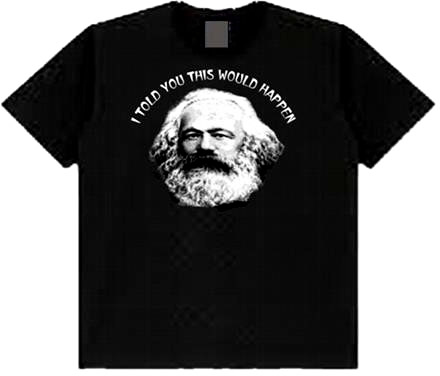
FIGURE 2: Karl Marx, “I told you this would happen”
Our reckless technical competence, based on an irresponsible S2 yoked to profit and militarism, vastly exceeds our understanding of its dangers. Thus we have to establish and enforce a graduated system of risk assessment and damage control based on the negentropic welfare of the human community and its eco-system as an overriding criterion. This means retaining, and indeed following consistently through, Merton’s four basic norms of science (see Introduction 1.42) or Kuhn’s five internal criteria: accuracy, scope, fruitfulness, consistency, and simplicity. However, it means also practicing science from the word go -- say, from its teaching -- as most intimately co-shaped by the overriding concerns why would it be worth supporting or indeed allowing by the community: “A stronger, more adequate notion of objectivity would require methods for systematically examining all the social values shaping a particular research process…” (Haraway, Modest 36, building on Harding; cf. also Wallerstein, End 164-67, 238- 41, and 264-65). A lot of discussion ensued during the Welfare State on how to fairly assess such risks, and in the USA the International Association of Machinists, spurred by automation, even formulated a “Technology Bill of Rights” (Noble, Forces 350-51). “Technology is the answer; but what was the question?” said the architect Cedric Price already in 1966. Humanity is from the atom bomb to AI, not safe but risking annihilation, biological or civilisational. A first virtue of any scientific undertaking must be to exercise a strategy of prudence and reduce risks to survival. The prevention of irreparable damage would have to move through clearly delimited stages, all of them subject to review boards with various mixtures of science and community representatives, at various levels from the basic research unit to international bodies. A first step is initial screening, calling a halt to what can be reasonably demonstrated as serious dangers in a decision-making about the future of novelties which must largely be based on unknowns. A second step is imposition of strict rules about a temporally as protracted as necessary testing of consequences before a full development, costly and perhaps impossible to reverse, is embarked upon. A third step is continuous and rigorous monitoringof important products and processes in use. Though lip-service is paid to these steps now they are not taken seriously, say in the wrong presuppositions of “dominating nature” within the Human Genome Project (cf. Lewontin). Still, they can and must be developed by efforts similar in size to the US Manhattan Project for the atomic bomb, only geared to survival rather than destruction. The steps will be costly, but less so than continuing the present waste. Decision-making in ignorance means “to place a premium on highly corrigible options,” so that mistakes can be eliminated both relatively quickly and cheaply (Collingridge 32). Monitoring requires adversary confrontation of factual evidence from different points of view, that is, who is it good for, when, how much -- " enabling the critical scrutiny of corporate decisions and actions, by and on behalf of competent and concerned opinion at every level" (U.K. Council for Science and Society 27, cited in Collingridge 147). This means that, first, in proportion to their importance, cost, and potential irreversibility, major scientific projects should not be allowed to become “in house” faits accomplis (matters already effected) without a public debate that follows the juridical norm of hearing more than one side. Second, recognising that “[e]very decision involves the selection among an agenda of alternative images of the future, a selection that is guided by some system of values” (Boulding 423), all individuals involved in screening, testing, and monitoring should provide the “bias statement” demanded already half a century ago by the American Academy of Sciences: a list of all previous major research funding, occupations, investments, public stands on political issues, and similar; clearly, this applies a fortiori to the biases of collective or legal bodies, without exemption. Today, we are steeped in technoscience: very little technology is to be had apart from the science that produced them, very little science is to be had apart from complex technology. It is a time not only of particle physics and molecular genetics but also nanotechnology, the misnamed “artificial intelligence,” and untold further possibilities of highly risky forays. We therefore must draw on and discuss all suggestions of limiting risks, such as the one on precautionary steps before prevention. These debates would be still recognisably scientific debates (cf. Collingridge 189-94), only enhanced by the wider horizon of a life-oriented S1, where the opponents are transparent and explicit about their presuppositions, and thus allow both an understanding how rival interpretations of data may be arrived at and, where necessary, a questioning of the presuppositions -- for example, not where to build a highway but also whether. These suggestions are no more than a first orientation. Almost all scientists are “barbarian experts” (C.P. Snow), and today willing mini-entrepreneurs of destruction. We need a science for survival (S1), which would look anew at its reason for being by openly acknowledging its civic political responsibility, and be steered -- probably, in the long run, less tightly than by capitalists -- by the interests of community and species survival. It might justify Nietzsche’s rhapsodic expectation: “An experimenting would then become proper that would find place for every kind of heroism, a centuries-long experimenting, which could put to shame all the great works and sacrifices of past history” (Fröhliche 39) -- truly, a happy science.
Darko Suvin presents a rigorous critique of our current ecological era, arguing that the planetary crisis is not a general human failure but a direct consequence of the "Capitalocene" and its relentless drive for accumulation. Through a blend of political philosophy, history, and social theory, Suvin dissects how the commodification of nature and labor has led to a systemic breakdown that threatens the very foundations of life. These articles, excerpted from Suvin’s book IT AIN’T NECESSARILY SO, challenge readers of The Montreal Review to look beyond surface-level environmentalism and confront the urgent need for a radical structural transformation. PART ONE: INTRODUCTORY POSITIONS PART THREE: THE DEADLY SICKNESS OF OUR CIVILISATION PART FOUR: OCCUPATION OF HORIZONS AND ORIENTATION: NAMING AND NOT NAMING This series of essays is paired with the work of Canadian photographer Edward Burtynsky. Born in 1955 in St. Catharines, Ontario, Burtynsky’s perspective was shaped by a childhood spent in a landscape dominated by the local General Motors plant and the massive shipping traffic of the Welland Canal. After learning the technical side of the craft in a darkroom his father built, he spent his early adulthood working in the very mines and factories he would eventually document. Over the last forty years, his career has focused on the human systems imposed on the natural world, with his work now held in major collections including the Museum of Modern Art in New York and the Tate Modern in London. The images featured here belong to his study of "manufactured landscapes." Rather than traditional nature photography, Burtynsky uses high vantage points to offer a bird’s-eye view of environments transformed by industry—from vast open-pit mines and quarries to sprawling oil fields and recycling yards. At a distance, these scenes can appear abstract and structured, often resembling painterly patterns of color and geometry. However, upon closer inspection, they reveal the minute details of industrial waste and labor. By showing the sheer scale of the systems that provide our modern goods, Burtynsky’s work provides a visual counterpart to Suvin’s text. Together, they invite us to look at the physical footprint of the global economy and consider the true cost of our way of life. *** |
PAPER EDITION
|
||

The Montréal Review © All rights reserved. ISSN 1920-2911