PART ONE INTRODUCTORY POSITIONS By Darko Suvin *** The Montréal Review, March 2026 |
||||||
Finding the way (Dao, iter vitae) is difficult amid suffocating obfuscation. Let me invoke some authorities:
The poem was written in the early 1950s when Faiz was in a Pakistan jail, accused of plotting for socialist rule; with thanks to my once student and constant friend Javed Malick who reminded me of it before his recent death. 1. The Urgency of Writing This* 1.1. Longer View (ca. 180 years)
History has falsified the second axiom: the city proletarians were partly bought off by colonial extra-profits, received or expected, and partly checked by exponentially rising military technology and the persuasion industry. Real revolutions happened whenever a well-organised, however small, communist nucleus persuaded the peasants to join them, in situations where a division into bitterly opposed imperialisms was paramount. Capitalist interests have never ceased to make war, and their class warfare fully won out after the 1970s, as Warren Buffett (“worth” at the time US$ 130 billion) gleefully pointed out in a 2006 interview. Subcommander Marcos of the Zapatista EZLN has put it classically:
Finally, it is not clear whether in historical class wars the bourgeoisie was not “the only revolutionary class that ever won” (Debord in 1971, point 87) – as opposed to the huge social breakdowns that ended Rome and the Mayas and several Chinese cycles. History is clearly proving the first Marxist axiom, now with the spear-points of the capitalist ecocide and a possible eco-suicide of the human species. Half a century of sabotaging a partial Welfare State has led to insane expansion of shoddy production and mass impoverishment, masked by wars and lies. The huge political and epistemic shift of these 50 years can be seen as the sick secretion of a 1% world ruling class (plus maybe 2-4% of direct subordinates participating in some ruling prerogatives), divided into a few power blocs in competitive enmity but all in unreconcilable opposition to the poor peasants, workers, and impoverished middle classes packed into city slums, the enterprising younger parts of which are migrating, risking and often losing their bare lives, to the richer North in order to survive. The salvational dilemma and need is still upon us but we see no collective salvational agent. All the powers of North America, Europe, and China (not to mention Russia and the Islam) are intent on further imperial destruction. I propose to discuss the dilemma as the rulers’ constricting and avid violence vs. personal and collective freedom of working people. 1.2. Shorter View (ca. 60 years) Summing up his 1960s’ delving into the tradition of revolutionaries, the great historian Eric Hobsbawm wrote an essay foreseeing “a combination of social disintegration and economic breakdown… more explosive than anything that occurred between the [World W]ars” except in Nazi Germany (334). His then outrageous forecast has been proved in spades and beyond anybody’s imagination in that generation, certainly including my own. “The [classical] marxist case against capitalism, that it would not work, and against liberal bourgeois democracy, that it was ceasing to exist, being replaced by fascism” (158), has been verified in the utter cynicism of the stock-market tyrants who at that time began effectively ruling the whole world. The stockmarketeers are both more elitist and more hypocritical than the Nazi variety, but with more experience and better technology they destroy the lives of labouring people and any democracy from below at least as efficiently as Hitler and the Japanese imperial fascists. Furthermore, they have a global reach never before managed: the number of hungry people in the first financial crisis after 2008 was at least 1,250 million, near to one sixth of the world’s population, and it keeps getting worse… In the half century after Hobsbawm’s lookout, capitalism has become more powerful, unified, and speedy than ever before. It has not only found new niches by means of profit-oriented sciences from cybernetics and electronics to genetics, nanotechnology, and AI, it has also colonised in capillary ways culture and even naked life (Agamben) -- say of the immigrants and other sub-proletarians, by now a world majority. In this relatively short span the bourgeois industrial roots have been forsaken in favour of financial fantasies creating only shameful mass misery and shameless billionaires. What may be crucial: it has most efficiently used the degeneration and denial of the communist idea in the USSR, and other States claiming to be such, to forestall any mass rethinking on a real Left -- today almost nowhere visible on the political map, so that we had to enthuse over Venezuela and Bolivia. This was done through a mixture of half-truths and lies repeated with Goebbelsian obsession, demoralising intellectuals as well as labour movements in the widest sense, cutting that link between them which had made revolutions possible at its beginning, while the link’s absence makes for the revolution’s ossification and failure. The giant capitalist colonisation of imagination has on the Left been recognised by isolated thinkers, who therefore tend to obscurity both in their writing and their success or impact outside a narrow academic group or political groupuscule: the long list of such lone intellectual giants goes from Walter Benjamin and Alfred Sohn-Rethel to the US rethinkers spearheaded by Fredric Jameson, and the only non-obscure exception would be poets like Brecht and a few others, say from Rimbaud through Hikmet and Neruda to Fortini. (If I have any valid insights, it would be from standing at their crossroads, while sharing the obscurity.) The capitalist Leviathan is today Yeats’s rough beast advancing toward Bethlehem or Godzilla destroying our homes in plain view. Let me bracket his shambling, as in gunnery, with one very general and one very particular shot. General: in Braudel’s view, finance capitalism is not simply a stage but a recurrent “Autumn” signal of transition from one world regime of accumulation and domination (e.g. the Genoese, Dutch, British, and US ones) to another; it signals the destruction of the old regime and formation of a “new” one -- a Winter which might be better or worse (cf. Arrighi ix-xiv), depending on whether it leads to a new Spring. Particular: the Chicago “ghetto” in 1988 was found to harbour "silent riots of everyday life," no less destructive if usually less spectacular. Private capital had completely withdrawn, in the years 1950-80 manual jobs fell from 36,000 to 5,000 and white-collar jobs from 1500 to less than 7.500 thousand. There was starkly insufficient welfare support and the police was incapable to protect victims from gangs, but lots of alcohol and gun-selling shops; the school system served mainly for "parking" of children, and infant mortality was higher than in Chile or Turkey. The informal economy was largely based on mass drug use, a veritable industry with sales in millions of $; drug pushing was also the main job readily accessible to ghetto youths from the age of 8-9 on. There was "organisational desertification": no banks but only currency exchanges, no public schools, cinemas, skating rinks, bowling alleys, the last two clinics closed in 1989 (all in Wacquant). In short, we are amid Max Weber’s "plunder capitalism" that leads to pandemics of oppression. 1% (yes one percent) of the richest people has the same financial weight as the remaining 99% of humans. Chicago might (or might not) have improved in the meantime, but the situation is still such in many other slums of capitalism, US or European or the world’s South. Winter is arriving fast and the climate destruction doesn’t look pretty. Particularly if one figures in all the wars from the First Gulf One through Serbia, Second Gulf, Afghanistan, Libya – up to the vaster killings in Russia/Ukraine and Palestine/Israel today, with more certainly to come. By their fruits ye shall know them. Gentle reader, you might wish to ask me: but what about a way out of our global abyss? Of course I’d have many ideas, not invented by me, about components and factors for a way out -- beginning, say, with universal guaranteed income sufficient to modestly live on for all adults working 35 hours a week, and a stress on education and health (and don’t tell me there’s no way to pay for this: just invest trillions into people instead of stocks and the military). Thus, I honour the question as supremely important: we need to get into health, activity, and tenderness. But this book is primarily not about a pragmatic way out (though that is its vanishing point) but about the trap of hunger, despair, and violence. For truth shall by itself probably not make you free, but it certainly may enable you to become free. The kind of writing I’m engaging has black passages, stemming from attempts to see our disastrous age in steady and converging ways. Yet what the book sees as black is a dominant feature always opposed by a recessive but clear hope. To live without hope is Dante’s indication that you are in Hell, indelibly engraved on its entrance door. In his Piano Trio no. 45, Haydn instructed a movement should be played “innocently.” Historians gloss it as “artlessly,” and I have tried to absorb the graceful aspect of not overcomplicating. However, when I had to choose between simplicity and precision of intent and scope, I chose the latter. After all, when was Haydn artless? 2. A Whiff of Epistemology and Science 2.0. How is one to responsibly and usefully approach our stark salvational needs? A start is to be self-conscious about how we think of anything, our epistemology, so as to offset inevitable major errors of commission and -- more insidiously -- omission. What should be our non-Cartesian method? What can we know? -- asked Kant in the first of his three famous questions looking back at his work. And probably “what” is inextricable from “how.” All critical thinking (including philosophy and practically all central scientific theories) begins with a conflict of stances and horizons between on the one hand doxa, generally accepted common and normative usage, and on the other systematic elaboration that must change the currently dominant languages and views -- which turns out to be the language and view of the dominant class. To apply this founding rule of knowing to knowledge itself: how can we get from opinions to more stable understanding? Or: which kinds of epistemic explanation and justification are necessary to stabilise, deepen, and widen any assumption of knowledge (see the Probe 3 On Epistemology)? Finally, what kind of values? Description carries a mirror, evaluation carries a sword. 2.1. As a first step, I often adopt an approach based on polar splitting of strategic conceptsas a central procedure of critical reason, dissatisfied with the present categorisations and insinuating opposed meanings under the same term. Kant seems to have a similar approach to “character” and some other key terms in his Anthropology book, where it is embedded into the opposition of Enlightenment vs. Unmündigkeit (it mainly means not being allowed full personal decision rights). Its richest form may be in Marx’s oppositions, emblematically in use-value vs. exchange-value, derived from “the quidproquo by reason of which the products of labour become commodities” (Capital 86). For a major example: epistemologically, we should split science into S1 and S2 (see the Probe 4 On Alternatives in/for Science below). My Great Ancestor here is Hesiod, who at the beginning of Works and Days invented the myth or allegory of the two Erises, the benign and the malign one. The bad Strife favours wars and civil discords. But the firstborn is the good Strife, whom Zeus has placed at the roots of the earth, for she generates useful emulation. I do not want to give up either on science or on technology, so that I shall call the firstborn, good science of humanising knowledge "Science 1" (S1) and the present one, whose results are mixed but seem to be increasingly steeped in the blood and misery of millions of people, "Science 2" (S2). The medieval theologians called them sapientia vs. scientia. These are ideal types only, intermixed in any actual effort in most varied proportions: also, the beginnings of S2 are in S1, and it retains certain of its liberatory birthmarks to the present day. Nonetheless, the fixation on dominationand the consubstantial occultation of the knowing subjectis inbuilt into the S2 professionalism. The avoidance of errors does not protect the scientific enterprise-as-is from the shared biases of its practitioners. It is highly normative in its theory and method, in the form of the result, the choice of field of inquiry, and the constitution of the scientific object (Aronowitz, Feyerabend). In sum, "The pattern of knowledge in science is... structured by interest and belief.... Theories, supported by megalibraries of data, often are systematically and dogmatically obfuscating." It is not by chance that "major technical efforts based on science have [led] to disastrous outcomes: pesticides increase pests; hospitals are foci of infection; antibiotics give rise to new pathogens; flood control increases flood damage; and economic development increases poverty" (Levins 180, 183, and 181) -- not to mention that atomic physics produces the A and H bombs, and so indefinitely on. The bourgeois civilization's main way of coping with the unknown is aberrant, said Nietzsche, because it transmutes nature into concepts with the aim of mastering it: I would say that it turns nature only into concepts and furthermore makes a more or less closed system out of concepts. It is not that the means get out of hand but that the mastery -- the wrong end or telos -- requires consubstantially wrong means of aggressive manipulation. If you want to be Master of your Domain, you must treat profit-making concepts as raw material on the same footing as profit-making labourers and iron ore. The problem lies not in the Sorcerer's Apprentice but in the Master Wizard. I conclude that S2 is not only a cultural revolution but also a political upheaval. The fallout of the scientific is the political. There is strong feedback between this "search for truth, proclaimed as the cornerstone of progress" and "the maintenance of a hierarchical, unequal social structure," within which capitalist rationalisation has created a large stratum of "administrators, technicians, scientists, educators" (Wallerstein 82-83). "To manage" originally meant to train a horse in his paces, in the manège. F.W. Taylor did exactly this -- he broke "the men," calling in his Shop Management for "a planning department to do the thinking for the men." As Marx noted, both machinery and science are used as “capitalised domination over work," building the growing, mutely antiutopian control into the new technologies. In the scientifico-technical revolution of the 19th century "science, as a generalised social property" (S1) was replaced by "science as a capitalist property at the very center of production" (Braverman 156). Already by the early 1960s, 3/4 of scientific R&D in the USA was corporate, financed directly or through tax write-offs by the Federal government -- that is, the expenses were taken from taxpayers while profits went to corporations (idem 164-66). By that time scientific research was mainly determined by expected profits to the detriment of S1, and it is as a rule subordinated to financial speculation. The huge exception is destructive military research, which seems to relate to upfront profit as the Freudian Subconscious (or is it the Superego?) does to the Ego. The resulting "scientific culture" (S2) "became also a means of class cohesion for the upper stratum [of cadres]. The great emphasis on the rationality of scientific activity was the mask of the irrationality of endless accumulation." (Wallerstein 84-85) A pioneering formulation of the degeneration is found in Nietzsche -- at the Bismarckian foundational time of big States and bigger armies – who richly dissects the scholar of his time as blending a true lust for newness (Neubegier) and for the “foxy” process of thinking with careerist egotism:
The splendid Loïs Wacquant calls this “the lemming effect”: true but insufficient. No doubt, we should foreground here the huge sums of money supporting such publications and careers to be made from them: "[t]he definition of science is made by those who are empowered to offer resources" (Traweek 144). Levins called this constellation in the 1990s science's "dual nature," springing out of "the liberal progressivist ideology" (183 and 184). He is clearly attuned to the feminist critique identifying its pitfalls as the denial of interaction between subject and object and the fixation on domination. The relation of domination between scientist and nature is quite analogous to the relation of a male upper class to the indispensable but dangerous Others of women and working classes as well as the relation of an imputed “White” master race to “coloured” and inferior populations. I agree with Levins's conclusion: "We should not pretend or aspire to a bland neutrality but proclaim as our working hypothesis: all theories are wrong which promote, justify or tolerate injustice" (191). But by now, a third of a century and untold horrors later, including a full subsumption of science as institution under the militarised surveillance-State ofcapitalism (to which I’ll return), a better strategy is to explicitly split the institutionalised horizons of science-as-is fully off from those of a potential science-as-wisdom- of-social-living-together, which would count its dead as precisely as the US armed forces do. In my probe On Alternatives in/for Science may be found a bibliography including matters for this subsection (cf. especially Keller 182-83, also Harding and Hintikka eds., Smith, and Noble Religion). The presupposition that science does not deal in values had as “its actual function to protect two systems of values: the professional values of the scientists, and the predominant [status quo] values of society as they existed at that moment….” (Graham 9, and cf. 28-29). Instead of clarifying matters in feedback with common experience, S2 strove for, and largely achieved, a monopoly of “expert knowers.” The correlative stance of "objectivity" and erasure of the subject actively fostered a deeply capitalist treatment of people -- workers, women, patients, consumers -- as objects to be manipulated just as nature was, "human resources." The Nazi doctors' experiments were only an extremely overt and acute form of such Herrschaftswissen, knowledge used for domination. 2.2. Marx believed he was doing science (Wissenschaft), and sometimes imprudently claimed there were iron laws in it. Yet he was also a pioneer of the insight that the proper way to talk about the capitalist exploitation which rules our lives is not in the a priori form of dogma, a closed system, but in the a posteriori form of critique, which is a denying science: it sketches in a powerful theory but as an antithesis to the capitalist norm. Cognition is here epistemically grounded in the process it describes and strategically developed by articulating a radically deviant stance against the dominant in a given historical situation (cf. also Marcuse). After World War 2, in view of both the atom bomb and Stalinism, Brecht tacitly revised his own allegiance to the term “scientific” and scientificity. The fact that they both may have been politically necessary when faced with Nazism loudly denounces the framing necessities. We must ruefully accept, with due differentiation, Gandhi’s harsh verdict about science: “Your laboratories are diabolic unless you put them at the service of the rural poor.” Or Brecht’s even richer question (sensing the worse to come, which has not ceased coming):
In his poem “1940” Brecht noted:
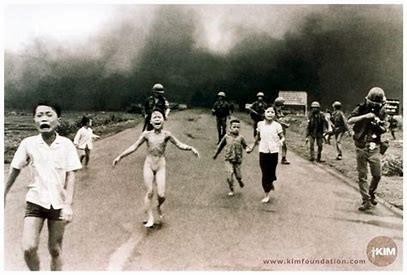
It follows that S2, science as we know it, cannot be accepted as the supreme epistemological arbiter. No approximation to truth or correctness can come about after Marx and Einstein if its approach does not incorporate the stance and horizon of the great majority that stands to gain from liberation: the soldiers and victims of imperial wars, the poor precariate, hungry or obese from Fast Food. Truth is, finally, liberatory or fake. If we are then asked: but isn’t water always H2O? – the answer is: it is such only for the honourable purposes of chemistry; for other purposes, it is not (Putnam, Gendlin). Water might be, for example, the difference between life and death, or between irrigation and overflowing wherever capitalism has sabotaged proper care of channels and for climate. True, a good basis to advance from is provided by Robert Merton’s famous four basic norms of science -- universalism, skepticism, public communism, and personal disinterestedness. In Merton’s original essay, published as “Science and Technology in a Democratic Order” during the antifascist World War, “communism” meant that the findings of science are common property to the scientific community, which relies on open communication and sharing. In all Cold War reprints it lost the „democracy“ in the title and reduced communism to a bland “commonality.” In this self-censored variant, Merton’s norms remained the basic approach of sociology of science up to the late capitalist renamings after the 1970s. It should be obvious that “thought must not be one, alone, singular, and unanimous” but multiple and convergent. As I shall argue later, disalienating thought is of a piece with “solutions, like everything in this world, [that] are built from the bottom up,” by transfers of power and agency from downward to upward: “from professional politics to everyday politics, from leaders to peoples, from the marginalisation of gender to direct participation of women, from mocking the other to celebrating difference” (Marcos 190, 117, and 217). To this is to be added strict scientific accountability that supplements not falsifying findings with being collectively responsible for their consequences: what and who is such an activity for? An example: in 1967/68 I was teaching in Amherst MA, and went with students of the elite Amherst College to demonstrate against a chemistry professor who had invented napalm, used for horrific burnings of live Vietnamese from US army helicopters. He came to the balcony and said aggrievedly, “But I have only written a formula”…
FIGURE 1: Children Burning from Napalm Bombing: “But I have only written a formula” (Nick Ut /The Associated Press)
A South Vietnamese village, Apr. 2, 1963: at the centre, nine-year old Phan Thi Kim Phúc, gravely burned on arms and back
The main emotion investing my approach is probably indignation, which Brecht called “that socially most productive approach”; Subcommander Marcos’s book title repeats it, and so will I. It goes hand in hand with a wide-eyed disbelief: how come that in a world with such high productivity of things billions of people live so poor a life, materially and morally? What has born and upholds the gigantic Leviathans inside which we have to live, the immeasurable bloodshed and psychic pain? A remaining open question is then which and how many people could be liberated how, at whose expense, and generating (or not) what new contradictions. I shall address this in the last part of the book.
***
Darko Suvin presents a rigorous critique of our current ecological era, arguing that the planetary crisis is not a general human failure but a direct consequence of the "Capitalocene" and its relentless drive for accumulation. Through a blend of political philosophy, history, and social theory, Suvin dissects how the commodification of nature and labor has led to a systemic breakdown that threatens the very foundations of life. These articles, excerpted from Suvin’s book IT AIN’T NECESSARILY SO, challenge readers of The Montreal Review to look beyond surface-level environmentalism and confront the urgent need for a radical structural transformation. PART ONE: INTRODUCTORY POSITIONS PART THREE: THE DEADLY SICKNESS OF OUR CIVILISATION PART FOUR: OCCUPATION OF HORIZONS AND ORIENTATION: NAMING AND NOT NAMING This series of essays is paired with the work of Canadian photographer Edward Burtynsky. Born in 1955 in St. Catharines, Ontario, Burtynsky’s perspective was shaped by a childhood spent in a landscape dominated by the local General Motors plant and the massive shipping traffic of the Welland Canal. After learning the technical side of the craft in a darkroom his father built, he spent his early adulthood working in the very mines and factories he would eventually document. Over the last forty years, his career has focused on the human systems imposed on the natural world, with his work now held in major collections including the Museum of Modern Art in New York and the Tate Modern in London. The images featured here belong to his study of "manufactured landscapes." Rather than traditional nature photography, Burtynsky uses high vantage points to offer a bird’s-eye view of environments transformed by industry—from vast open-pit mines and quarries to sprawling oil fields and recycling yards. At a distance, these scenes can appear abstract and structured, often resembling painterly patterns of color and geometry. However, upon closer inspection, they reveal the minute details of industrial waste and labor. By showing the sheer scale of the systems that provide our modern goods, Burtynsky’s work provides a visual counterpart to Suvin’s text. Together, they invite us to look at the physical footprint of the global economy and consider the true cost of our way of life. *** |
PAPER EDITION
|
||

The Montréal Review © All rights reserved. ISSN 1920-2911