
PART FOUR OCCUPATION OF HORIZONS AND ORIENTATION: NAMING AND NOT NAMING By Darko Suvin *** The Montréal Review, March 2026 |
|||||
1. Orientation as Language I have been in the preceding sections describing some lineaments of events with huge impact on a huge majority of people: war, violence, oppression, and cognate evils. But flies in the fly-bottle must be very careful about understanding or cognition, our only means to get out. It is a matter of life and death. Thus, let me spiral back to how can we working people understand events. First and perhaps last, we understand somatically -- judging by the suffering and emotions inscribed on our body and mind (cf. Scarry). But in between, our orientations are to a large degree determined by language. This holds especially when we need to understand the “events behind the events,” the fields of force determining both how to parse facts and how to oppose them or not. How is Hamlet’s choice between living and suicide worked out, and in particular the choice about radical opposition, whether “to take arms against a sea of troubles,/ And by opposing end them”? It is a meditation naming some of his corporeal feelings, such as “to suffer,” also values such as “nobler,” and implying the occurrences (Aristotle’s pragmata) begun by his father’s murder. The choice of how to formulate his personal but also generalisable historical orientation exists as stage language -- and gestures -- organised around impressive terms, beginning with the initial bang of “To be or not to be.” Largely, however, and both politically and cognitively central is that human understanding is arrived at by means of language. I shall be speaking here to semantic shapes that become typical terms, strictly tied to a current politico-economical phase of dominant relationships of production and therefore between large human groups. I follow mostly Brecht and Raymond Williams, but then also the Soviet critics Vygotsky and Vološinov/Bakhtin, who refuse the capitalist equation of language and communication in favour of a tension between the ruling hegemonic formulations (doxa) and a creativity in both author/speaker and reader/listener. The root of this attitude is to be found in a passage of The German Ideology by Marx and Engels: “Language is as old as consciousness, language is practical consciousness that exists also for other people, and for that reason alone it really exists for me personally as well; language, like consciousness, only arises from the need, the necessity, of intercourse with other men.” We do not know what the early hominids invented language for, but a good candidate is coping with the violence from outside the group and later also inside the group – fleeing naked corporeal violence, substituting for it or implying it. Creativity is forceful but it is neither violent nor does it pretend to a technical, “value-free” horizon. Any stance of a major societal group orientation will develop a terminology grouped around key terms, I note in the Introduction. The terms are neither Platonic essences nor immediate actions but essential preparations and preconditions for social action, increasingly weighty on a mass scale; together with the material (political and economic) pressures and counter-pressures, the terminology grows into determinants of personal but always also class “practical consciousness.” This is especially clear in the recurring terms that result from large- scale changes occasioned by increasingly dynamic ruling-class activity within capitalist circulation, killing more and more people. In our times, the key ruling terms are fake and their affirmation is lying. This is enshrined in all aspects of our public sphere, dominated by the State apparati of warfare against its own people and other peoples. It has led to systematic successful poisoning of the language wells well before Donald Trump’s rise, as of 1977 it even has an academic name, “the illusory truth effect.” In a nutshell, constant repetition of falsehoods makes them a familiar part of the social landscape, and the more familiar it is, the more people, over time, are ready to accept the lies as true, even more so than actual truths presented to them once or twice. It’s also been called “hindsight bias,” meaning that “those recalling the many repetitions assume there must be something to them” (Davidson). Grammatically speaking, the new terms are mainly verbs, nouns or adjectives, I think. As bell hooks remarked, “The word ‘love’ is most often defined as a noun, yet we would all love better if we used it as a verb”: verbs are oriented toward getting things done. Nouns are more evident and I shall speak only about them. But for immediate and simplified communications, where terms must have the propagandistic advantage of being poorer and easier to manipulate, in our ruling implied encyclopedia (Eco) “liberty” obfuscates better than liberation or emancipation (which implies prior slavery), “fraternity” is better than plebeian fraternising (say between enemy armies in World War 1, whom the Bolsheviks rightly exhorted to turn their arms against the rulers instead), and “equality,” an essential but murky term, is better than to say paying taxes according to wealth (as halfway accepted in the Welfare State). A little history: ancient Rome’s strong and overt class warfare was always solved by transferring it to external conquest that could pacify the lower classes by giving them a very small share in the spoils. Servius Tullius (reputedly mid-6th century BCE) defined its inhabitants as classes in function of warfare. The rich who could have a horse -- or to whom the State gave one -- were horsemen, the middling rich who could afford bodily armour and personal arms were various classes of foot-soldiers, and the huge non-class who had nothing but strong sons (proles) was to carry wood and water for the richer warriors. The legendary king Tullius was an early name-giver, but his naming is already a full-scale evasion. For the wars took in an agrarian community about 3 months per year while 9 months were internal class relationships of daily strife, purposely glossed over. In this exemplary source I find an evil allegory of misrule: the proletarii -- the landless workers, city artisans, petty traders, and sundry riffraff ohne Habe und Gut (German idiom meaning without possessions or goods and suggesting no good) -- were most probably a numerical majority. But in Tullius’s weighted system they were given one vote out of ca. 145 in the Roman representative assembly that decided on taxes, and in fact they were never asked to vote. This overt example is at work, much more covertly, in all merely parliamentary “democracies.” While for the long duration of 4-5,000 years the Communist Manifesto was right in generalising about class society, we ought to add that capitalocene subjugation of existential time makes it imperative to focus on its most threatening thrusts, such as huge social accelerations and personal haste. The more productivity rises -- which in a sane system would lead to a, say, 15 hours’ working week (Keynes) -- the less time there is for the frantic elbowings of people. We live in a pressure system of bureaucratised and militarised breathlessness: “I can’t breathe,” groan victims. The great warning of Audre Lorde’s that “the master's tools will never dismantle the master's house” was actually a metaphor for the masters’ (patriarchal) attitudes, and in that sense remains pathbreaking. 2. Renamings
2.1. Approach When engaged in rendering matters clear, language uses definition or other explication, most frequently naming. Any of them is a choice and an attitude, a way that forecloses taking other ways. All texts are created in feedback with contexts and target audiences. Recurring and typifying, the terms are in a strange relationship with definitions: more immediate yet suggesting a tendency toward definitions. Definitions themselves are often divided into lexical (those drawn from analyses of given sets of recorded words and propositions, say by a given writer) and stipulative (those that explain how a term should be used). Strict lexical definitions are statistically useful and checkable for accuracy, but even at their rare best they cannot but reproduce and fix some power relationships they were designed to foreshadow; in fact, they often transgress into stipulative. Only stipulative definitions can really pretend to be binding or normative (for given purposes), that is, to relate to “truth.” Any would-be historical approach mixes lexical particulars with general stipulative values. Any explication means eliminating, Quine noted, because it attempts to serve a given semantico-pragmatic aim or orientation, and not other aims. How can we judge the eliminations and therefore limits of any explicit explanation or implicit naming? One strong criterium has been its fertility (Carnap), that is, for how many purposes of given human groupings is such language useful. But depending on the reigning norms and powers, a fertility may take centuries to manifest itself and have notable ups and downs – for example, Lucretius’s great atheist poem Of the Nature of Things was discovered by chance, after 11 centuries of full infertility, by a Renaissance humanist in 1417 and has been extraordinarily fertile since. I would today propose that at least one more criterium should be added to Carnap’s four formal ones, dealing with what kind of liberating or disalienating effect an explanation or term putatively can have. All fertilities are imaginific bets, anchored in needs and some evidence of possibility. Renaming to account for new societal constellations and/or new ways for seeing and judging them is a frequent feature of language. It is always a Siamese twin to a shift in sociopolitical power: who names a social constellation indicates how it might or ought to be used. Obversely, an ascent of new names or indeed nominal clusters is always already a descent into rubbishing or better into oblivion of earlier names or clusters. A huge semantic revolution was for example the introduction of Christian religious texts and their commonplaces in Europe, or the variants of Buddhism in India and then East Asia. But in preindustrial societies such shifts were glacially slow, even if accompanied by much violence – Christianity took over 300 years establishing the hegemony. Matters accelerate in the swifter of western Europe and the USA from the end of 18th century on, and in the whole world through their colonial domination. In ever “hotter” (Lévi-Strauss) successions, such semantic earthquakes happened in each world victory or defeat of capitalism, so that Victor Hugo could transfer the deeds of his father’s revolutionary generation into putting ”a Phrygian [revolutionary] cap on the old dictionary.” Many other ancestors of renaming may be found after Hesiod’s splitting of terms (see Part 1, 2.1). One is the Confucian writings when they stress zhengming(正名), “the rectification or proper use of names,” in order to make terms impose on reality and to function as the foundation of a just State and society (possibly that part is due to Mo-zi or Me-ti, Brecht’s favourite Chinese philosopher). Names or terms establish publicly accessible standards and models of understanding, categories created in order to usefully intervene into practice: “names should be spoken appropriately, and what is spoken should be carried out appropriately” (Analects XIII.3, translation adjusted). Today it seems indispensable to counteract this naming, where “[the implicit] power being exercised is the power to disguise power” (Fairclough 52), by much Hegel. If we call any property, event or relationship X, then – as Wittgenstein told us, see Part 3 above – it is an illusion and mystification to see X as a divinely given, fixed entity. Toi the contrary, in any poragmatic situation X functions as A; and in Hegel any strategically important X is always a contradiction, both A and -A. In Marx this becomes materialist, ascending upward from the need of humans to subsist, and historical, based upon a political economy consubstantial with class power. An example might be the rich central cluster of terms around “work”: Marx saw it both as “labour” (and then he rectified the term into “labour power”) that produces in interaction with nature all the “goods” the human species needs (A, use value), and as bent by class power into “exploitation” and particularly as alienated by capitalism into “commodities” for the sake of “profit” (-A, exchange value). My final and possibly most usable Great Ancestor is Brecht, I shall limit myself to part 5 of his indispensable essay To Write the Truth (1935), where he observes that in his Nazi times anyone who says ”population” in place of “people” or “race” is by that simple act withdrawing his support from a great many lies. He is taking away from these words their rotten mystical implications. The word people (Volk) implies a certain unity and certain common interests; it should therefore be used only when we are speaking of a number of peoples, for then alone is anything like community of interest conceivable. The population of a given territory may have a good many different and even opposed interests -- and this truth is being suppressed. Also, […w]henever oppression exists, the word “obedience” should be employed instead of “discipline”: for discipline can be self-imposed and therefore implies something noble that obedience lacks. And a better word than “honour” is “human dignity”; the latter tends to keep the individual in mind. We all know very well that scoundrels thrust themselves forward, clamoring to defend the honour of a people. And how generously they distribute honours to the starvelings who feed them. Brecht concludes that there are “many cunning devices by which a suspicious State can be hoodwinked,” citing Thomas More’s country of Utopia which is deliberately modelled on England but it is round instead of triangular and just instead of unjust. Similarly, Marx cited More’s splendid image for early capitalism coming about, “sheep eat men” – English land-tillers are evicted since the big cattle ranchers profit more by sheep, whereas in Utopia people eat sheep. Brecht’s final example is Shakespeare, who provides a model of cunning utilised for spreading of truth: it is Antony’s speech over Caesar’s body. Antony continually emphasises that Brutus is an honourable man, but he also describes the murdered body, and this description of the deed is more impressive than the description of the doer. The orator thus allows himself to be overwhelmed by the facts; he lets them speak for themselves. 2.2. Pragmatics I The pragmatics of triumphant capitalocene -- which in many cases, as in China and Russia almost always and in the USA more and more, leans to direct State guidance and violence – are in good part anchored in the huge semantic fallout imposed by mass media. This change of the determining horizon for meaning and value is an airtight demonstration of the proposition in Marx’s and Engels’s German Ideology that „the ruling ideas are… the ideal expression of the dominant material relationships, the dominant material relationships grasped as ideas.“ The carefully obliterated link between mega-violence, such as nuclear bombs, and everyday prettification leading to huge profits can be seen in the example of the term“bikini.” After the early US nuclear tests at Bikini Island in the occupied Marshall group of Pacific islands in 1946, a French designer used the atoll’s name for a first commercial two-piece beach suit for women, hotly disputed by patriarchal nostalgia. A huge “bikini industry” and popularity eventually ensued and lasts to this day. I too was in the 1950s-60s enthralled by the likes of Brigitte Bardot and Ursula Andress, but also uncomfortably aware of what was suppressed by this small liberation of female midriff. That is, by 1954 the US government had detonated an H-bomb in the Marshall Islands -- the first of six H-bomb detonations, totalling about 48 megatons, a series that had 3,200 times the destructive power of the Hiroshima atomic bomb! Intense fallout in the atolls up to 200 miles away afflicted natives with life-threatening radiation doses comparable to those of the Hiroshima and Nagasaki survivors; the official Marshall Islands’ “danger zone” had to be increased to approximately twice the size of Texas. The internal report of the US Atomic Energy Commission’s Division of Biology and Medicine stated that as a result of these tests “everyone in the USA [160 million people] received a dose of 830 millirems to the thyroid.” The explosions released roughly 1.4 billion curies of radioactive iodine, most of which shot up to the stratosphere above our planet, which dwarfs by 30 times the combined amounts of radioiodine released by the later Chernobyl and Fukushima disasters. Publicly, the AEC was lying about the worst radiological disaster in US history (see Alvarez). However, the contamination and dispossession stemming from secret nuclear tests were replaced by female swimsuit fashion for the male gaze. We don’t know whether any US financial encouragements were given to the swimsuit namer. It is possible that the “political unconscious” (Jameson) of the bedazzled millions in the developing economic boom sufficed for the shift of meaning. Change of main denotation for a term works longer and more reliably than, but in tandem with, outright lying. Of course, the exotic and eventually sexually suggestive “bikini” is much more efficient than President Putin’s term of “special military action” for an attack and then war on the Ukraine. 2.3.Pragmatics II The common horizon of the mass renamings implicit in racism, imperialism, and warmongering is a politics that presupposes capitalist relations of competitive enmity among people are simply natural. The main means of this tacit politics was, after bodily violence, the deforming or reshaping of meanings that imposed a system of misleading and false classification without spelling out a self-conscious doctrine, so that its strong precepts and prohibitions could remain generally hidden. This is a black or nightmarish analogy to the two interlocking operations that make for dream formations, which Freud brilliantly named displacing or shunting (Verschiebung) plus condensation (Verdichtung). The sweeping renamings in aggressive capitalocene were produced by expanding technologies that claimed to be knowledge-driven but were determined and justified by the horizon of profit. They enabled and pushed vast lesions of human bodies, hidden or pooh-poohed as collateral damage. Profit-making is the new God,
Such technologies were much boosted by tying them into wide internet access and using them – against early hopes for democratic enlightenment – to ensure “all of life is a paid-for experience,” as the subtitle of a 2001 book by Jeremy Rifkin has it. This is the only way profit- making can use technology: first refuse to figure in and refund costs borne by nature and all other human commons, then use it for fusing State with megacorporation surveillance -- which needs no Nazi Gestapo, since your omnipresent cellular phone will tell us what we need about your meetings and interests. Knowledge is taken from peoples’ bodies into violent and commodified corporate and State ownership. Its function – both in language and technology – is to occupy the possible and real horizons and orientations of people. An example is the quintessentially capitalocene term of “growth,” used as a key for all budgets from single enterprise to States and global bodies. It is a mass quantification which has nothing to do social well-being. It is defined as:
Under capitalism, housing, health care, good education, even healthy food (and so on) are either not produced or commodified and priced out of reach of the working class, and then increasingly the middle class. This explains why even in officially rich countries, despite their high production and potentially higher productivity, more and more people cannot make ends meet. In the USA, a quarter of the population lives in substandard housing and nearly half cannot afford health care. Outside the “North Atlantic” countries and a few others, the situation is much worse. A kindred example is “globalisation,” universally and triumphally employed by capitalocene propaganda from ca. 1989 to 2008, after which it fell into disrepute. This very imprecise term (cf. Suvin “Tractate,” also On Capitalocene above) became a powerful metonymy for a single market system using interconnection between all parts of the world in order to increase the profits of big corporations; it was rendered possible both by US dominance and by new electronic and transport technologies. The underlying adjective “global” was in opposition to, first, “universal or cosmopolitan” in Enlightenment discourse, and second to ”international,” often used by the socialist-communist discourse. The new term, suggesting roundness and bounty, so fully erased the Cold War division into the three US, Soviet, and “non-aligned” (or fought over) “worlds” that some military schools ceased teaching geography: it was enough to have a global financial market and satellite pinpointing for global bombing. By the way, the same market hawkers who were, from the 1970s on, for one whole generation propagating the virtues of globalism leading to universal prosperity, have in the last dozen years switched to barking new and sterner gods: these quick-change lay missionaries might be amusing if they were not horrific. Drumbeaters for all seasons, now they domesticate the iron realities of Social Darwinist mega-killings. The capitalocene system of alienating renamings accelerated from the 1980s on as on the one hand the rulers wrenched the focus of richer States away from sharing some power with the middle class and some ease with the workers, generating fairly inclusive welfare and strong protests against warfare, and on the other hand developed new mass communications with armies of “influencers” accelerating and seamlessly propagating the new Only Truth of the World. The ensuing renomination grew into networks, a language of mutually supporting building blocks of semantic coercion, IKEA or lego-style (cf. Kuljiċ), which went on to occupy the dominant heights of meaning as decisive heavy artillery: „instead of occupying buildings, we shall occupy notions,“ said in 1973 a key West German politician (cf. Liedtke et al. eds.). Todor Kuljiċ found in ex-Yugoslav and general European history at the end of the 20th century, this “civil war of memories” (40), three historically consecutive waves of changing terminology: a shock phase of innovation after the collapse of old power structures; then a longer phase of accustoming to the shock as a new routine while demonising and ironising the old terminology; and finally, the rule of a new orthodoxy, “a dogmatised hegemonic rhetoric…. Key notions were used to help understanding, impose meaning, and control ideational consent” (19 and 54). 2.4.Some Categorisation I would here distinguish several semantic ploys. First, new meanings that changed crucial terms/notions were invented. Two examples: the to be tabooed term of “communism” was first equated to Stalin’s mass repressions after ca. 1928, as if the early Christian agapè meals or the Israeli kibbutzes were Stalinist; then it was nonsensically equated with Nazism in „totalitarianism“ (see Suvin “Orwell”), as if tens of millions of people died fighting Nazism while being really much the same. Another example is the unclear and blanket use after 2001 of the term “terrorism” (see Suvin “Exploration”), which US President G. W. Bush Jr. is reputed to have defined by ostension i.e. pointing, as „whatever I call terrorism.“ A third example is the evasion of defining “poverty” by sociologists and all UN agencies, using either nonsensical limits like an income of 2 US$ per day or the term of “relative deprivation.” The new naming always means tabooing a host of old names, and its goal is to render ominous, ridiculous, and finally unthinkable any term suggesting radical alternatives, such as first of all “communism” but then also revolution, utopia or national/State independence. A subsidiary variant was to fully travesty old names – e.g., “utopia” means what is unrealistic and impossible; and “revolution” should return to its original Latin meaning of movement in a circle, possibly with a new set of characters ruling on top of an equally repressive structure, or it should be a new profit wave based upon a new technology (say electric cars). Very often, the tabooed terms were not explained, they were of the devil and preferably dealt with by superior shelling power (as already noted in Paradise Lost). Interestingly and ominously, “capitalism” as a term was tainted by enemy use and disappeared from the semantic horizon during ca. 1980-2000, to be reinstated here and there when its beneficence could be overtly praised in the 21st century within the equally nonsensical coinage of “neoliberalism,” which suppressed Mill or Mazzini. A second ploy is a refurbishing of old truly liberal or liberating terms such as democracy, freedom or justice, torn from their historical revolutionary moorings and sufficiently broadened to mean anything favourable to capitalism (cf. Suvin „Exploration“ and Keucheyan); if those moorings were too strong, as in equality and fraternity, the terms were discarded, while liberty’s vagueness meant it could be used. Most efficient in the last 50 years was perhaps the expropriation of the term “nation” to mean subservience to world capitalism while here and there preserving a small space for the local upper classes under foreign banking networks; its function is to prevent the sway of the democratic notion and term of “people” (in the clearest Left variant: “the working people”). The third ploy is overt renomination by neologism: globalisation instead of internationalism, student loans trapping victims into debt for decades instead of the non-repayable scholarships that my generation had, and very many more. All of this is legally enforced, first as -- up to a point necessary -- authorial copyright, but then as patents, trademarks, and franchises covering entire industries: all of them involve proper names that become illegal and punishable if not paid for, which leads to oligopolies or outright monopoly (cf. already Kapp 219-22 and passim). These are platform, neofeudal names. Last not least, in movies, TV, and then other multimedia, capitalism discovered powerful ways of steering an audience by images in tandem with language. This is obvious in the legally enforced mega-categories of brands and trademarks, as in the simple example of the Coca Cola bottle below. Together with technologised warfare, these “communication” technologies -- largely one-way from rulers downward to masses – are the main pillar of the ocean of violence that most of us sail on poor rafts. I cannot talk about the strong and misused language-plus-image coalition in capitalocene but only hope that my general prospects may apply also to them. Here are two examples with images and comments:
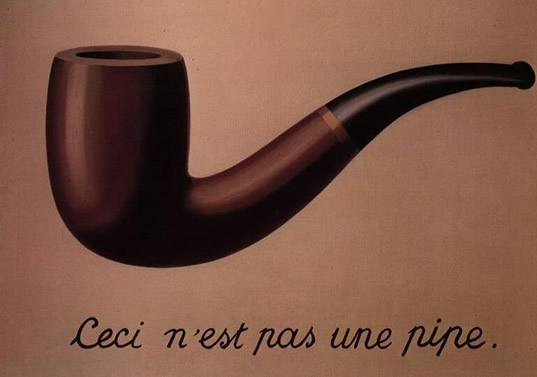
FIGURE 3: René Magritte, This Is Not a Pipe, (1929)
Of course it isn’t: it’s a painting (but OF a pipe: ceci mobilise votre imagination d’une pipe) FIGURE 4: The Coca-Cola Bottle (1913)
The Coca Cola bottle is not simply a signifier shape signifying a use-value bottle and no more -- or possibly less, like defeated Macbeth version of life: “a tale told by an idiot, full of sound and fury, signifying nothing.” The signified of that bottle is a commodity artificially (on purpose and slyly) made distinctive, unique – so to speak monotheist -- and comfortably familiar in order to be purchased, and legally forbidding other shapes of bottle using the same brand. As exchange-value it serves the God of Profit and is thus a sanctified commodity (as Brecht’s Galileo ironically calls his secret manuscript): “I am your Lord God, thou shalt have no other God beside me” (Exodus and Isaiah).
3. The Construction of Preemptive Taboos I have kept for the last what actually must have been among the first devices of semantic shoddiness to blur societal horizons, and remains in a way emblematic: the omnipresent – if so to speak covert – dilution into commonplaces. First example: “X can have a meaningful impact” or “will bring a positive change,” X being here mostly a legal brand or measure for which users must pay extra – say, the electric car engine, now losing its record profits aura in favour of the more enticing armaments industry. The blur is achieved by infinite repetition that could in general vaguely mean so many things that it ends up by meaning nothing in particular except that it ought to be bought. Second example: “climate change,” used to allude to, among others, intense droughts, water scarcity, severe fires, rising sea levels, flooding, melting polar ice, catastrophic storms, and declining biodiversity. Yet “change” seems to have here no subject, at best it is agreed that since about 1800 it comes from “humans.” It should properly be something like “severe heating and climate bending, issuing in serious threats to many forms of life, for which our economico-political rulers are primarily responsible”... Such blurring fuzziness is especially beloved by brand salesmen, PR, and politicians, forever promising rosy turns that they well know may not or will not actually happen. The defining orientation of tabooing explication forces the addressee to supply his own (false) mental implication, recommends the device’s frequency, and much increases its power. A perfectly fake fit of prohibition and innovation, of implication putting taboos on “impure” terms together with an aggressive plethora of new meanings blared out by all loudspeakers, was the extremist consistency of the Nazi regime in Germany 1933-45. It introduced a huge hateful racist vocabulary as closed doctrine (cf. Klemperer), coupled with overwhelming State violence that included untold millions of dead both in concentration camps and forced slave labour -- let me add that this killing spree wasn’t countered but imitated by UK and US airforces’ bombing of big German cities. The untranscended example of false naming, of a piece with the whole “racial theory” (biologically, there are NO RACES within Homo sapiens), is the arrow at entrance of concentration camps for Jews, communists, homosexuals, and other deviants pointing “to showers” that led to mass gassing: its lie is based on changing the word domain or category from slavery to pleasure. It remains a model for all aggressive fusions of State capitalism with corporate profit and swift proliferation of violence in internal and external warfare. This is why a Fascism 2.0, duly changed for new ideological variants, remains a permanent temptation for imperialist ruling classes as the alternative to gradual and hypocritic parliamentary “neoliberalism,” lurking behind and often permeating it. In particular, both the so-called Covid-19 pandemic and the Russo-Ukrainian and now the Gaza war have been used by all rulers, especially in Europe, to push a sweeping prohibition of critical thinking as a kind of high treason In the Covid pandemic, the rulers were pushed (only in the global North) into a largely useful set of measures. This is not the case in the ongoing wars, hugely profitable for US and some other armament industries but ruinous for most people in Europe, not to speak of the mass murders in Gaza. Both of these defining turns of the present-day world intensify the alteration of “intellectual property” into “cognitive capital” and increase ecocide (cf. Gorz 56-63 and passim). Competitive capitalism descends into a series of neo-feudal rents on “platforms,” accompanied by various forms of debt and slavery: as of the neo-colonial destruction of Ghaddafi, slaves are now bringing $400 per strong specimen on open Libyan markets. A semantic screen or turtle shield is thus installed. What such a shield allows formulating becomes, after one generation of tabooed alternatives, not only the common sense but the only available sense – a Social Darwinist one -- for younger generations. True, an important minority has been warning us against practices and terms bringing about a brainwashed generation; I’ll mention four names. The fundament is established, as so often, by Marx in his perspicacious approach to consumption: production also creates the user for itself (Grundrisse 90-94). Second is Günther Anders, who explored this horizon early on in his horror at atomic weaponry: “Evidently, we do not recognise [that mass media adds to its phantoms their ‘meanings,’ that is, what we should think and feel about them]. The reason for our inability is that the daily and hourly overfeeding with phantoms that appear as ‘the world’ prevents us from ever being hungry for our own explanations…” (Anders 2: 198, cf. also 166-67 and 197). He was clear about how “the might of a world view is not maintained by the answers it might give but by the questions it knows how to choke off” (1: 349). Noting the acceptance of the atom bomb, he inverted Hegel’s famous dictum that the Whole is the Truth to claim that “The Whole is a lie: first of all, the Whole,” and he pointed out this was not a theoretical but a pragmatic whole (1: 164). Third ìs Fredric Jameson’s frequent return to the hypothesis of a “manipulatory theory of [mass] culture” or false consciousness: “the henceforth manipulated viewer is offered specific gratifications in return for his or her consent to passivity” (287). Fourth are the warnings by Fidel Castro in a message to Cuban students published in 2010: When the mass media [had been fully developed], it took control of peoples’ minds and exercised its power through not only lies, but also conditioned response. A lie … affects one’s knowledge whereas the conditioned response affects one’s ability to think…. Responses have been created for you: ‘This is bad, that is bad; socialism is bad,’ … ‘communism is bad’. Earlier, with a peak from the 1890s to the 1930s, poetic High Modernism developed in conjunction with a depth epistemic and political search for new cognitive terms such as “imperialism” or “genocide”; this was especially clear in semicolonial areas explored by Joyce, Krleža, Faulkner, and many major Latin Americans. However, the fashionably despondent Post-Modernism gleefully condemned and buried any search for radical alternatives. The novelties could only be more lustfully destructive ones -- in value terms, fake novums (cf. much more in Suvin “Looking”). We can conclude that transferring ever shoddier mass production from current politico-economical practice to the economy of semantic terms produces a reader hidebound by a specific but never explained or properly argued terminology. The strategic epicenter of words and word-arrangements that speak any speaker says “all that is true appears, all that appears is true”; any remaining truth in this closed and upside down is world a part of the overall falsity (adapted from Debord on spectacle, points 12 and 9). The everyday alienation of the reader or viewer produces either closed-off acquiescence or illusory ways out -- say magic – that finally reinforce oppression and cruelty. This is life in ever narrower antiutopia.
***
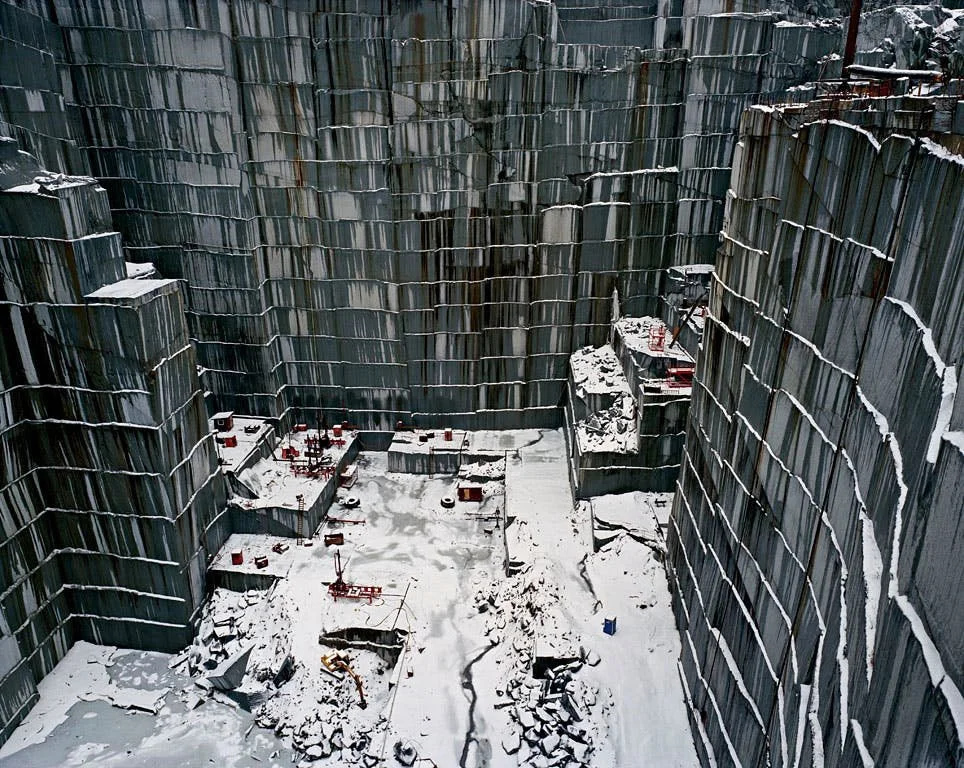
Darko Suvin presents a rigorous critique of our current ecological era, arguing that the planetary crisis is not a general human failure but a direct consequence of the "Capitalocene" and its relentless drive for accumulation. Through a blend of political philosophy, history, and social theory, Suvin dissects how the commodification of nature and labor has led to a systemic breakdown that threatens the very foundations of life. These articles, excerpted from Suvin’s book IT AIN’T NECESSARILY SO, challenge readers of The Montreal Review to look beyond surface-level environmentalism and confront the urgent need for a radical structural transformation. PART ONE: INTRODUCTORY POSITIONS PART THREE: THE DEADLY SICKNESS OF OUR CIVILISATION PART FOUR: OCCUPATION OF HORIZONS AND ORIENTATION: NAMING AND NOT NAMING This series of essays is paired with the work of Canadian photographer Edward Burtynsky. Born in 1955 in St. Catharines, Ontario, Burtynsky’s perspective was shaped by a childhood spent in a landscape dominated by the local General Motors plant and the massive shipping traffic of the Welland Canal. After learning the technical side of the craft in a darkroom his father built, he spent his early adulthood working in the very mines and factories he would eventually document. Over the last forty years, his career has focused on the human systems imposed on the natural world, with his work now held in major collections including the Museum of Modern Art in New York and the Tate Modern in London. The images featured here belong to his study of "manufactured landscapes." Rather than traditional nature photography, Burtynsky uses high vantage points to offer a bird’s-eye view of environments transformed by industry—from vast open-pit mines and quarries to sprawling oil fields and recycling yards. At a distance, these scenes can appear abstract and structured, often resembling painterly patterns of color and geometry. However, upon closer inspection, they reveal the minute details of industrial waste and labor. By showing the sheer scale of the systems that provide our modern goods, Burtynsky’s work provides a visual counterpart to Suvin’s text. Together, they invite us to look at the physical footprint of the global economy and consider the true cost of our way of life. *** |
PAPER EDITION
|
||

The Montréal Review © All rights reserved. ISSN 1920-2911